
Makeup and colourCleaning and laundry
Acetone: the nail polish remover solvent that is riskier for small children
CAS 67-64-1.Also known as propanone, dimethyl ketone, and 2-propanone.
Editorial draft Last reviewed 15 November 2026 About 598 words
CC INDEX
How it works46/100 Moderate
Acetone poisoning can cause drowsiness, slowed breathing and coma, but small accidental sips are unlikely to harm adults. Nail polish remover and some cleaners make household exposure common. The sources reviewed describe few consumer limits, so the score sits in the moderate band.
An editorial summary of this article’s cited evidence. It isn’t medical advice or a personal risk estimate.
Age index
What is the age index?Which age groups are more affected by this chemical’s possible health issues, based on this article’s sources.
- Pregnancy Unborn babies Not well studied
- Infants 0 to 1 Not well studied
- Young children 1 to 5 Higher concern
- Children 6 to 12 Higher concern
- Teens 13 to 19 Moderate
- Adults 20 to 64 Lower concern
- Older adults 65 and over Moderate
- Young children (higher concern): Even small amounts can be dangerous for a child
- Children (higher concern): Even small amounts can be dangerous for a child
- MedlinePlus says a small accidental sip is unlikely to harm an adult but even small amounts can be dangerous to a child; the sources reviewed do not give specific data for pregnancy or older adults.

Illustration of a bathroom shelf. Acetone is the solvent in many nail polish removers.
Credit: Chemical Century; AI-generated illustration
License: CC0 1.0
Illustration, not a photograph of a specific product. Resized and cropped for the web.
The sharp, sweet smell of nail polish remover is usually acetone, a solvent also found in some cleaners, glues and lacquers. Because it dissolves polish and sticky residues so well, it is a fixture in many bathrooms and craft drawers. An accidental small sip is unlikely to harm an adult, but even small amounts can be dangerous for a young child. Storing it like any other household chemical, capped and out of reach, takes care of most of the risk.
Everyday exposure: where you meet it and how much
Acetone can be found in nail polish remover, some cleaning solutions, some glues including rubber cement, and some lacquers. [1] Poisoning usually happens when someone swallows it, but it may also occur from breathing in fumes or absorbing it through the skin. [1]
It is also used to extract flavour from spices, and US rules allow a small residue in spice oleoresins. [2]
Known and suspected harms
Evidence labels are editorial summaries, not individual risk predictions: established means recognized under the stated conditions; probable means a likely contribution with uncertainty; possible means limited evidence; disputed means assessors disagree. These labels do not describe how common an effect is.
- Established — effects of poisoning: symptoms can include nausea and vomiting, belly pain, a sweet taste or fruity odour, a feeling of drunkenness, drowsiness, lack of coordination, confusion, low blood pressure, slowed or difficult breathing, increased urination and, in serious cases, coma. [1]
- Established — children are more vulnerable: MedlinePlus says accidentally drinking small amounts is unlikely to harm an adult, but even small amounts can be dangerous to a child. [1]
- Established — outlook: if a poisoned person survives past 48 hours, the chances of recovery are good. [1]
Reducing avoidable exposure and harm
Keep nail polish remover and solvent-based glues capped and stored with other household chemicals, out of children's reach. If someone swallows acetone, seek medical help right away and do not make the person vomit unless poison control or a provider says to. [1]
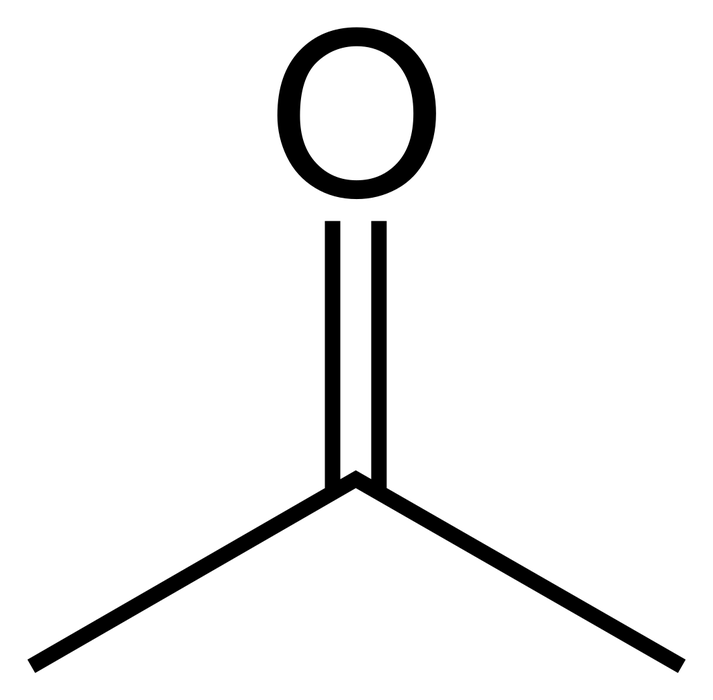
Skeletal structure of acetone.
Credit: Fvasconcellos / Wikimedia Commons

License: Public domain
Rendered from SVG to PNG, whitespace trimmed and placed on white
What it is
Acetone (CAS 67-64-1), also called propanone or dimethyl ketone, is a solvent used in many household products. [1,3]
What it does and why it is used
As a solvent it is used in nail polish removers, some cleaning solutions, some glues and some lacquers. [1] In food processing it is used to extract spice flavours. [2]
Regulatory status and health context
Canada
The sources used for this review do not cover acetone's status in Canada, so we do not summarize it here.
United States
FDA sets a tolerance of 30 parts per million for acetone residue in spice oleoresins when it is used to extract the spice. [2]
European Union
The EU law website was not fully available when this article was reviewed, so EU legal status was not checked and is not summarized here.
Environmental notes
The sources used for this review do not assess acetone's environmental effects, so we do not summarize them here.
Quick facts
- CAS: 67-64-1. [3]
- Where: nail polish remover, some cleaners, glues and lacquers. [1]
- Main danger: drowsiness, slowed breathing and coma if a large amount is swallowed. [1]
- Most at risk: young children. [1]
Sources
All URLs were fetched on 2026-11-15. The EU law website was not fully available that day, so EU legislation could not be checked for this review. Source publication dates differ from this draft's review date.