Chemicals are part of almost everything you do.
Food, makeup, cleaning products, medicines, plastics. Chemical Century sets out what the evidence says about the harms.
Claims stay tied to their sources. This is not a diagnosis.
254 chemical articles and 4 topics so far, built to hold thousands.

New
The CC INDEX
Every chemical article now carries a score from 1 to 100. A higher score means the cited evidence points to more serious, better-established harm at everyday exposure. It sums up the sources, and it isn’t a diagnosis. How the score works
- 1–20Low
- 21–40Mild
- 41–60Moderate
- 61–80High
- 81–100Very high
Browse
Where a chemical shows up
The group is where a substance shows up. The harm, where the evidence supports one, is in the article.
Printable guides
Take the evidence home
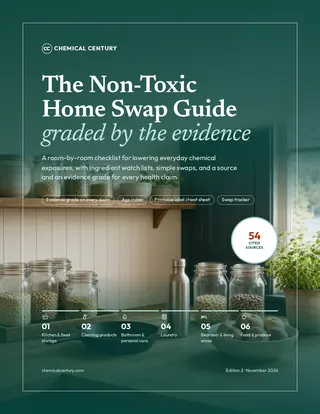
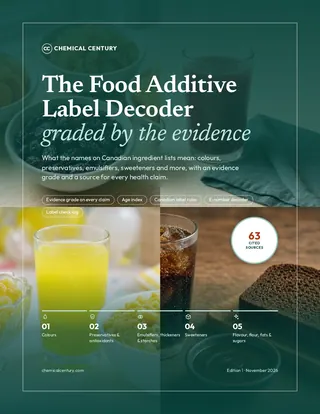
Short, illustrated PDF guides with checklists, every claim evidence-graded and cited. 4 guides, $4 each.


Read
Featured articles
What each substance is, where people meet it, and what the sources say about harm.
 CC INDEX 46 out of 100, Moderate
1,4-Dioxane
The trace contaminant in some shampoos and detergents
1,4-Dioxane forms as a by-product when certain detergents, foaming agents, emulsifiers and solvents are made, so traces may occur in some cosmetics, detergents, shampoos and…
 CC INDEX 40 out of 100, Mild
Acesulfame potassium
The heat-stable sweetener in diet drinks and sugar-free treats
Acesulfame potassium is used as a sweetener in foods and drinks and appears on labels as acesulfame K, acesulfame potassium or Ace-K. [1] It is about 200 times sweeter than…
 CC INDEX 62 out of 100, High
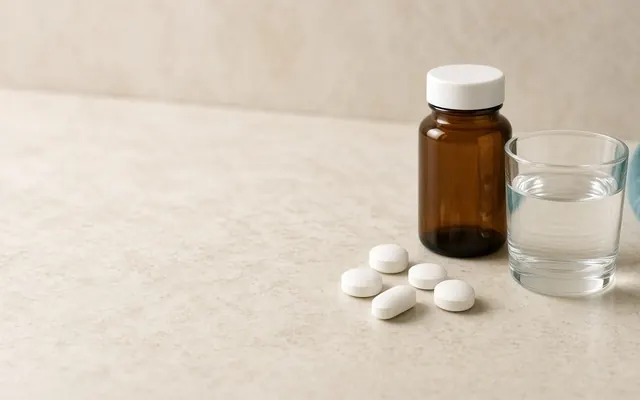
Acetaminophen
Common pain relief with a narrow margin for overdose
Acetaminophen, called paracetamol in most of the world, is used for pain and fever. It is sold on its own and in many cold, flu, sleep and prescription combination products.…
Topics
Beyond a single chemical
Some harms are not one substance. Topics are the longer explainers, and they link back to the chemical articles.