
Aflatoxin: the mould toxin in nuts and grains that regulators keep to low levels
CAS 1162-65-8.Also known as aflatoxin B1 and mycotoxin.
Editorial draft Last reviewed 15 November 2026 About 571 words
CC INDEX
How it works42/100 Moderate
Aflatoxins cause cancer in animals and large amounts can damage the liver, but US regulators test foods and allow only low levels. Exposure comes through common foods such as peanuts and corn, so the score sits in the moderate band.
An editorial summary of this article’s cited evidence. It isn’t medical advice or a personal risk estimate.
Age index
What is the age index?Which age groups are more affected by this chemical’s possible health issues, based on this article’s sources.
- Pregnancy Unborn babies Lower concern
- Infants 0 to 1 Lower concern
- Young children 1 to 5 Lower concern
- Children 6 to 12 Lower concern
- Teens 13 to 19 Lower concern
- Adults 20 to 64 Lower concern
- Older adults 65 and over Lower concern
- The sources used for this review do not give age-specific advice.

Illustration of peanuts. Discard nuts that look mouldy, discoloured or shriveled.
Credit: Chemical Century; AI-generated illustration
License: CC0 1.0
Illustration, not a photograph of a specific product. Resized and cropped for the web.
Aflatoxins are toxins made by a mould that can grow on nuts, seeds, legumes, corn and wheat, including peanuts and peanut butter. They are known to cause cancer in animals, so food is tested and US regulators allow only low levels they consider unavoidable. The FDA believes occasionally eating small amounts poses little risk over a lifetime. Large amounts may cause acute liver damage.
Everyday exposure: where you meet it and how much
Aflatoxins are toxins produced by a mould that grows on nuts, seeds and legumes. [1] The mould may be found in peanuts and peanut butter, tree nuts such as pecans, corn, wheat and oil seeds such as cottonseed. [1]
Known and suspected harms
Evidence labels are editorial summaries, not individual risk predictions: established means recognized under the stated conditions; probable means a likely contribution with uncertainty; possible means limited evidence; disputed means assessors disagree. These labels do not describe how common an effect is.
- Established — cancer in animals: aflatoxins are known to cause cancer in animals. [1]
- Established — large amounts: aflatoxins swallowed in large amounts may cause acute liver damage. [1]
- Established — long-term exposure: chronic intoxication may lead to weight gain or loss, loss of appetite or infertility in men. [1]
- Probable — low levels: the FDA allows aflatoxins at low levels as unavoidable contaminants and believes occasionally eating small amounts poses little risk over a lifetime. [1]
- Established — hazard classification: for aflatoxin B1, 100% of reports classify it as fatal if swallowed or inhaled and as possibly causing cancer. [2] Percentages are shares of company reports to the European Chemicals Agency's classification inventory, as compiled by PubChem.
Reducing avoidable exposure and harm
Discard any nuts that look mouldy, discoloured or shriveled. [1] The FDA tests foods that may contain aflatoxin, and peanuts and peanut butter are among the most rigorously tested products. [1]
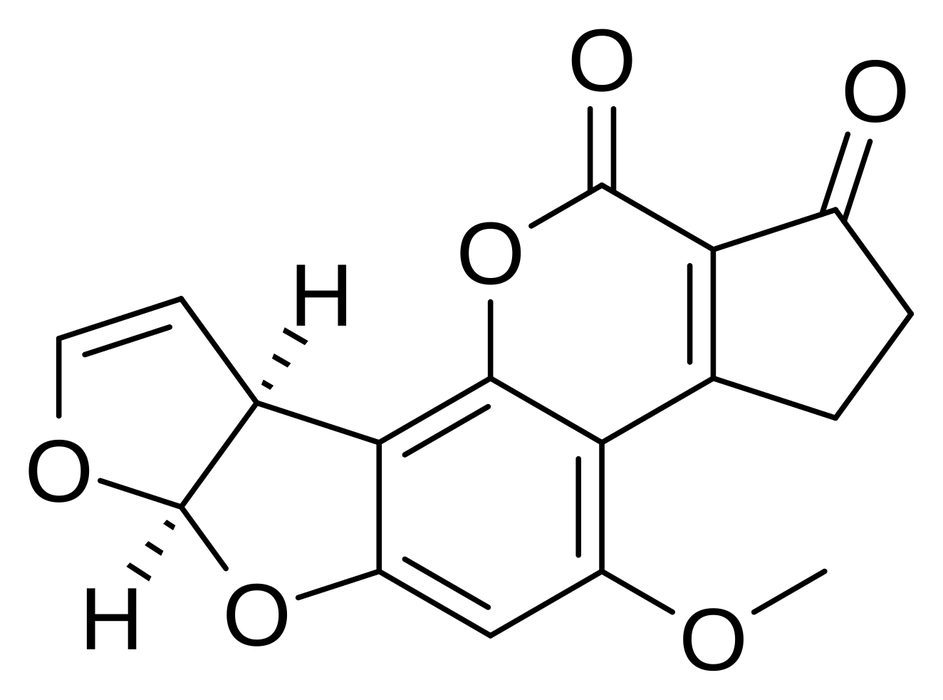
Structure of aflatoxin B1.
Credit: Ed (Edgar181) / Wikimedia Commons

License: Public domain
Rendered from SVG to PNG, whitespace trimmed and placed on white
What it is
Aflatoxins are mould toxins; aflatoxin B1 (CAS 1162-65-8) is one of them. [1,3]
What it does and why it is used
They can damage the liver and are known to cause cancer in animals. [1]
Regulatory status and health context
Canada
The sources used for this review do not summarize Canadian rules for aflatoxins, so we do not describe them here.
United States
The FDA allows aflatoxins at low levels in nuts, seeds and legumes because they are considered unavoidable contaminants, and it tests foods that may contain them. [1]
European Union
The EU law website was not fully available when this article was reviewed, so EU legal status was not checked and is not summarized here.
Environmental notes
The sources used for this review do not assess aflatoxin's environmental effects, so we do not summarize them here.
Quick facts
- CAS: aflatoxin B1, 1162-65-8. [3]
- Where: mouldy nuts, corn, wheat, oil seeds. [1]
- Main concern: liver damage; cancer in animals. [1]
- Tip: discard mouldy or shriveled nuts. [1]
Sources
All URLs were fetched on 2026-11-15. The EU law website was not fully available that day, so EU legislation could not be checked for this review. Source publication dates differ from this draft's review date. The CAS number and hazard classification shown are for aflatoxin B1, one aflatoxin.