
Household materialsWater, air and residues
Chromium: the shiny metal with one cancer-causing form
CAS 7440-47-3.Also known as Cr, hexavalent chromium, chromium(VI), and chromium(III).
Editorial draft Last reviewed 15 November 2026 About 675 words
CC INDEX
How it works60/100 Moderate
Chromium(VI) compounds are known human carcinogens when inhaled at work, while chromium(III) is far less toxic. Everyday exposure is generally low. Drinking water limits apply in Canada and the US, so the score sits in the moderate band.
An editorial summary of this article’s cited evidence. It isn’t medical advice or a personal risk estimate.
Age index
What is the age index?Which age groups are more affected by this chemical’s possible health issues, based on this article’s sources.
- Pregnancy Unborn babies Not well studied
- Infants 0 to 1 Not well studied
- Young children 1 to 5 Moderate
- Children 6 to 12 Moderate
- Teens 13 to 19 Moderate
- Adults 20 to 64 Moderate
- Older adults 65 and over Moderate
- ATSDR says no studies have looked at chromium's effects in children, who would likely have the same effects as adults, and there are no studies showing birth defects in humans.

Illustration of everyday items linked to chromium: stainless steel, chrome plating, tanned leather and older treated lumber.
Credit: Chemical Century; AI-generated illustration
License: CC0 1.0
Illustration, not a photograph of a specific product. Resized and cropped for the web.
Chromium gives stainless steel its shine and resistance to rust, and a small amount of one form, chromium(III), is even needed by the body. Another form, hexavalent chromium, is a different story: breathing it at work can cause lung cancer. Everyday contact with chrome-plated taps and steel cookware is generally not a concern. Avoiding tobacco smoke and old treated lumber, and testing well water, can lower exposure further.
Everyday exposure: where you meet it and how much
Chromium is found in rocks, soil, plants and animals; its main forms are chromium(0), chromium(III) and chromium(VI). [2] It is used in alloys such as stainless steel, and found in wood treated with copper dichromate, leather tanned with chromic sulfate, and stainless-steel cookware. [2]
Hexavalent chromium compounds are used in metal finishing and chrome plating, stainless steel production, leather tanning and wood preservatives. [1] Workers are exposed mainly by breathing dusts, mists or fumes, especially in electroplating, welding and chromate painting. [1] Chromium is also a component of tobacco smoke. [2]
Known and suspected harms
Evidence labels are editorial summaries, not individual risk predictions: established means recognized under the stated conditions; probable means a likely contribution with uncertainty; possible means limited evidence; disputed means assessors disagree. These labels do not describe how common an effect is.
- Established — cancer: workplace exposure to hexavalent chromium compounds is associated with lung cancer and cancers of the nasal cavity and sinuses; IARC classifies chromium(VI) compounds as carcinogenic to humans. [1,2]
- Established — airways and allergy: exposed workers can develop nose irritation, runny nose and breathing problems such as asthma and wheezing, as well as allergies causing breathing difficulty and skin rashes. [2]
- Possible — swallowing chromium(VI): in animals, swallowing chromium(VI) mainly harmed the stomach, small intestine and blood; studies of people living with high chromium(VI) in drinking water have had mixed results. [2]
- Established — chromium(III) is less toxic: chromium(III) compounds are much less toxic and small amounts are needed for health. [2]
Reducing avoidable exposure and harm
Avoid tobacco smoke, avoid older pressure-treated lumber, and consider having well water tested. [2] People who work with chromium should launder work clothing separately to avoid bringing it home. [2]
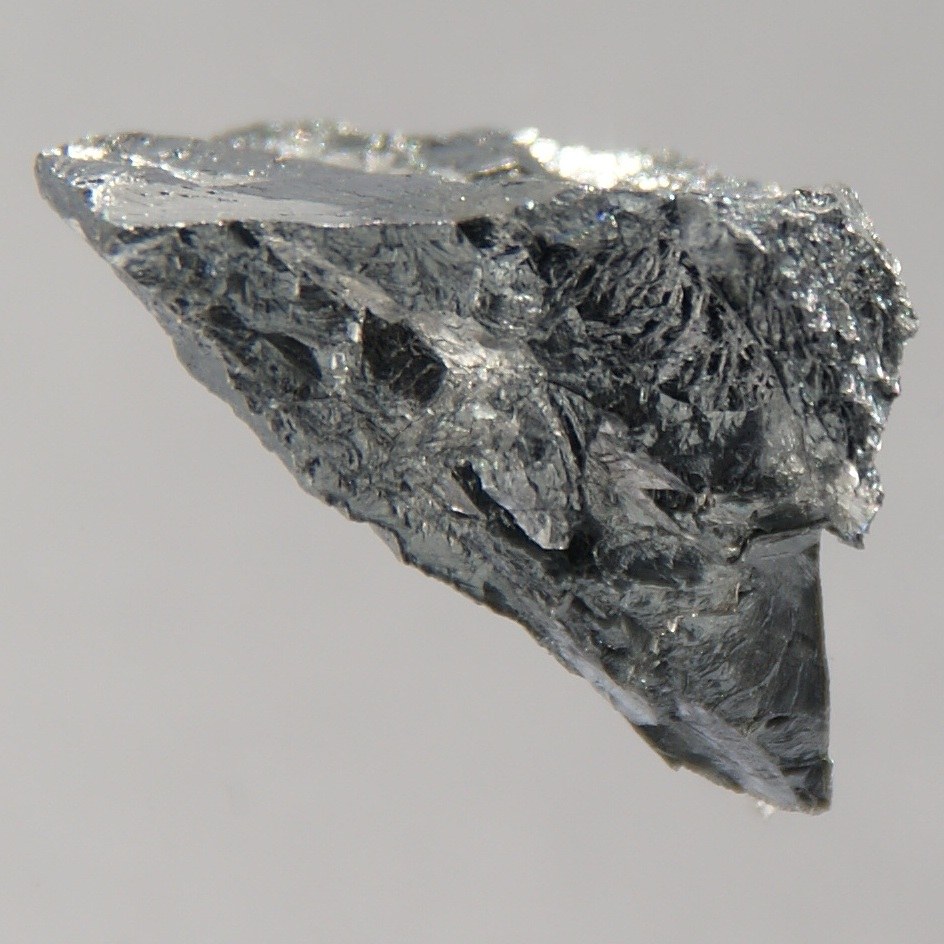
Chromium metal.
Credit: Hi-Res Images of Chemical Elements / Wikimedia Commons

License: CC BY 3.0
Resized for the web; no content edits
What it is
Chromium (CAS 7440-47-3) is an odourless, tasteless metallic element found in the Earth's crust, air, water, soil and food. [1,5]
What it does and why it is used
Chromium compounds add corrosion resistance, durability and hardness, and are used in alloys, pigments, plating, leather tanning and wood preservation. [1,2]
Regulatory status and health context
Canada
Canada's drinking water guideline sets a maximum acceptable concentration of 0.05 mg/L for total chromium, set to protect against both cancer and non-cancer effects of chromium(VI). [3]
United States
The US drinking water limit for total chromium is 0.1 mg/L. [4] ATSDR notes that use of chromated copper arsenate wood treatment in residential settings ended at the end of 2003. [2]
European Union
The EU law website was not fully available when this article was reviewed, so EU legal status was not checked and is not summarized here.
Environmental notes
Chromium can be released into air, soil and water by industries such as electroplating, leather tanning and textile production. [2]
Quick facts
- CAS: 7440-47-3. [5]
- Where: stainless steel, chrome plating, tanned leather, older treated wood. [1,2]
- Main danger: lung cancer from inhaled chromium(VI) at work. [1]
- Most at risk: platers, welders and other exposed workers. [1]
Sources
All URLs were fetched on 2026-11-15; Health Canada pages were read with a separate web-reading tool because they did not respond to this review's direct requests. The EU law website was not fully available that day, so EU legislation could not be checked for this review. Source publication dates differ from this draft's review date.