
DEET: the classic bug repellent and how to use it safely on children
CAS 134-62-3.Also known as N,N-diethyl-meta-toluamide, diethyltoluamide, and N,N-diethyl-3-methylbenzamide.
Editorial draft Last reviewed 15 November 2026 About 692 words
CC INDEX
How it works40/100 Mild
EPA's reviews found normal DEET use is not a health concern, including for children, so severity scores low. Many people apply it in summer, so exposure is seasonal but common. Health Canada sets age-based strength and frequency limits, so the score sits in the mild band.
An editorial summary of this article’s cited evidence. It isn’t medical advice or a personal risk estimate.
Age index
What is the age index?Which age groups are more affected by this chemical’s possible health issues, based on this article’s sources.
- Pregnancy Unborn babies Lower concern
- Infants 0 to 1 Higher concern
- Young children 1 to 5 Moderate
- Children 6 to 12 Moderate
- Teens 13 to 19 Lower concern
- Adults 20 to 64 Lower concern
- Older adults 65 and over Lower concern
- Infants (higher concern): Health Canada says no DEET for babies under 6 months
- Health Canada sets lower maximum strengths and fewer applications for children and advises against DEET for infants under 6 months; MedlinePlus advises lower concentrations for pregnant women and small children.

Illustration of a summer picnic table. DEET is a common ingredient in personal insect repellents.
Credit: Chemical Century; AI-generated illustration
License: CC0 1.0
Illustration, not a photograph of a specific product. Resized and cropped for the web.
DEET has been the go-to insect repellent for decades, sprayed or rubbed on before hikes, camping trips and evenings on the deck. It works well against mosquitoes and ticks, which matters where insects carry diseases. Safety reviews have found that normal use is not a health concern, including for children, but age-appropriate strengths and limits still apply. Reading the label and using just enough on exposed skin is usually all it takes.
Everyday exposure: where you meet it and how much
DEET is sold in liquids, lotions, sprays and impregnated materials such as towelettes; products for direct application to skin contain from 5 to 99% DEET. [1] It is designed to be applied to people's skin and is not used on food. [1] In Canada it is one of several approved personal repellent ingredients. [2]
Known and suspected harms
Evidence labels are editorial summaries, not individual risk predictions: established means recognized under the stated conditions; probable means a likely contribution with uncertainty; possible means limited evidence; disputed means assessors disagree. These labels do not describe how common an effect is.
- Established — no concern from normal use: after comprehensive reviews in 1998 and 2014, EPA concluded that normal use of DEET does not present a health concern to the general population, including children, and identified no risks of concern to human health or the environment. [1]
- Established — skin and eye irritation from misuse: MedlinePlus advises keeping repellents out of the eyes, avoiding sunburned skin, not breathing in or swallowing them, and using high concentrations on the skin only where disease risk is high. [3] Health Canada advises stopping use, washing the skin and getting medical help if a reaction is suspected. [2]
- Established — protection from disease-carrying insects: EPA says DEET repels ticks for about two to ten hours and mosquitoes for two to twelve hours, depending on concentration. [1]
Reducing avoidable exposure and harm
Follow Health Canada's age limits: up to 30% DEET for adults and children over 12; up to 10% for children 2 to 12, no more than 3 times a day; up to 10% for children 6 months to 2 years, no more than once a day; and none for babies under 6 months, who can be protected with a mosquito net. [2] Children under 12 should not use DEET daily for more than a month. [2] Apply a small amount to exposed skin or clothing, not to children's hands or directly to the face, do not spray indoors, and wash it off when you come inside. [2,3] If using sunscreen too, apply sunscreen first. [2]
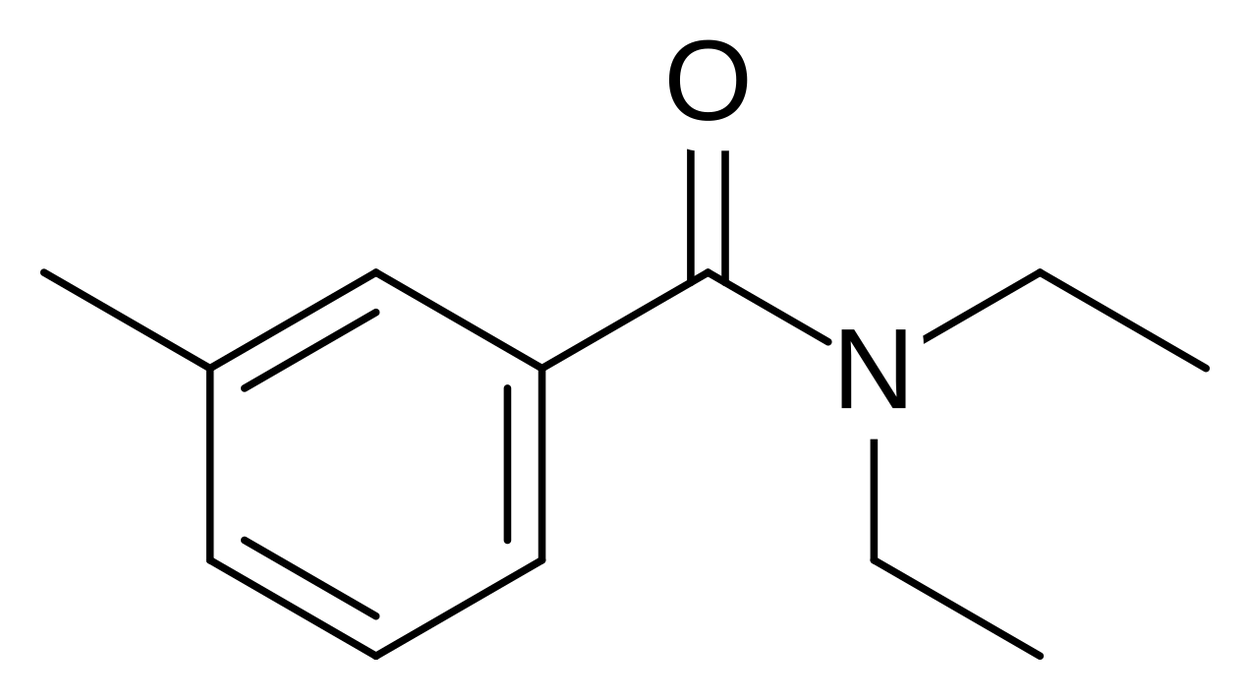
Structural formula of DEET (N,N-diethyl-meta-toluamide).
Credit: Calvero / Wikimedia Commons

License: Public domain
Rendered from SVG to PNG, whitespace trimmed and placed on white
What it is
DEET (CAS 134-62-3), N,N-diethyl-meta-toluamide, is a synthetic insect repellent. [1,4]
What it does and why it is used
Rather than killing insects, DEET repels them, making it harder for mosquitoes and ticks to bite. [1]
Regulatory status and health context
Canada
Health Canada approves DEET repellents and sets maximum concentrations and application limits by age, including no use for infants under 6 months. [2]
United States
EPA registers DEET products, has found normal use not to be a health concern, and completed an interim registration review in 2014. [1]
European Union
The EU law website was not fully available when this article was reviewed, so EU legal status was not checked and is not summarized here.
Environmental notes
EPA's 2014 interim review identified no risks of concern to non-target species or the environment. [1]
Quick facts
- CAS: 134-62-3. [4]
- Where: insect-repellent sprays, lotions and towelettes. [1]
- Main concern: irritation when overused or misapplied. [2,3]
- Most at risk: infants under 6 months, who should not use it. [2]
Sources
All URLs were fetched on 2026-11-15; Health Canada pages were read with a separate web-reading tool because they did not respond to this review's direct requests. The EU law website was not fully available that day, so EU legislation could not be checked. Source publication dates differ from this draft's review date.