
Erythritol: the sugar alcohol in low-sugar sweeteners and the heart question researchers are studying
CAS 149-32-6.Also known as sugar alcohol.
Editorial draft Last reviewed 15 November 2026 About 715 words
CC INDEX
How it works40/100 Mild
An observational study linked high blood erythritol to heart attack and stroke, but FDA says it did not show cause and effect. Erythritol is common in low-sugar and sweetener products. It is permitted with limits in Canada, so the score sits in the mild band.
An editorial summary of this article’s cited evidence. It isn’t medical advice or a personal risk estimate.
Age index
What is the age index?Which age groups are more affected by this chemical’s possible health issues, based on this article’s sources.
- Pregnancy Unborn babies Lower concern
- Infants 0 to 1 Lower concern
- Young children 1 to 5 Lower concern
- Children 6 to 12 Lower concern
- Teens 13 to 19 Lower concern
- Adults 20 to 64 Lower concern
- Older adults 65 and over Lower concern
- The sources used for this review do not give age-specific advice on erythritol.

Illustration of low-sugar baking. Erythritol is a sugar alcohol used in sweetener blends and reduced-sugar foods.
Credit: Chemical Century; AI-generated illustration
License: CC0 1.0
Illustration, not a photograph of a specific product. Resized and cropped for the web.
Erythritol is a sugar alcohol that shows up in many low-sugar baked goods, drinks and granulated sweetener blends. It is a little less sweet than sugar, has fewer calories, and tends to be gentler on the stomach than other sugar alcohols. A 2023 study linked high blood levels of erythritol with more heart attacks and strokes, which has raised questions. US regulators say that research did not establish that erythritol caused those problems, so the link may or may not hold up as scientists keep studying it.
Everyday exposure: where you meet it and how much
Erythritol occurs naturally in fruit and fermented foods and is used in many foods marketed to people with diabetes; it is a main ingredient added to stevia and monk-fruit sweetener products. [1] When used as a sweetener, levels are typically more than 1,000 times higher than those found naturally in foods. [2] It falls under the sugar alcohol category, which is not required to be listed individually on US Nutrition Facts labels. [2]
Known and suspected harms
Evidence labels are editorial summaries, not individual risk predictions: established means recognized under the stated conditions; probable means a likely contribution with uncertainty; possible means limited evidence; disputed means assessors disagree. These labels do not describe how common an effect is.
- Possible — heart attack and stroke: in a 2023 study, people with the highest blood erythritol levels were about twice as likely to have a heart attack, stroke or death over three years as those with the lowest levels. [2] In laboratory tests erythritol made platelets more reactive and sped up clotting in mice, and blood levels rose about 1,000-fold in volunteers after one sweetened drink. [2]
- Disputed — cause and effect: FDA reviewed the 2023 paper and concluded the observational studies did not establish that erythritol caused the effects, and says it will keep monitoring new information. [3] MedlinePlus says more research is needed. [1]
- Established — stomach effects: unlike other sugar alcohols, erythritol does not usually cause stomach upset. [1]
Reducing avoidable exposure and harm
If you want to limit it, check ingredient lists of sugar-free and low-carb products and sweetener blends, since it may not appear separately on the nutrition panel. [1,2] MedlinePlus says more research is needed on possible long-term effects of erythritol. [1]
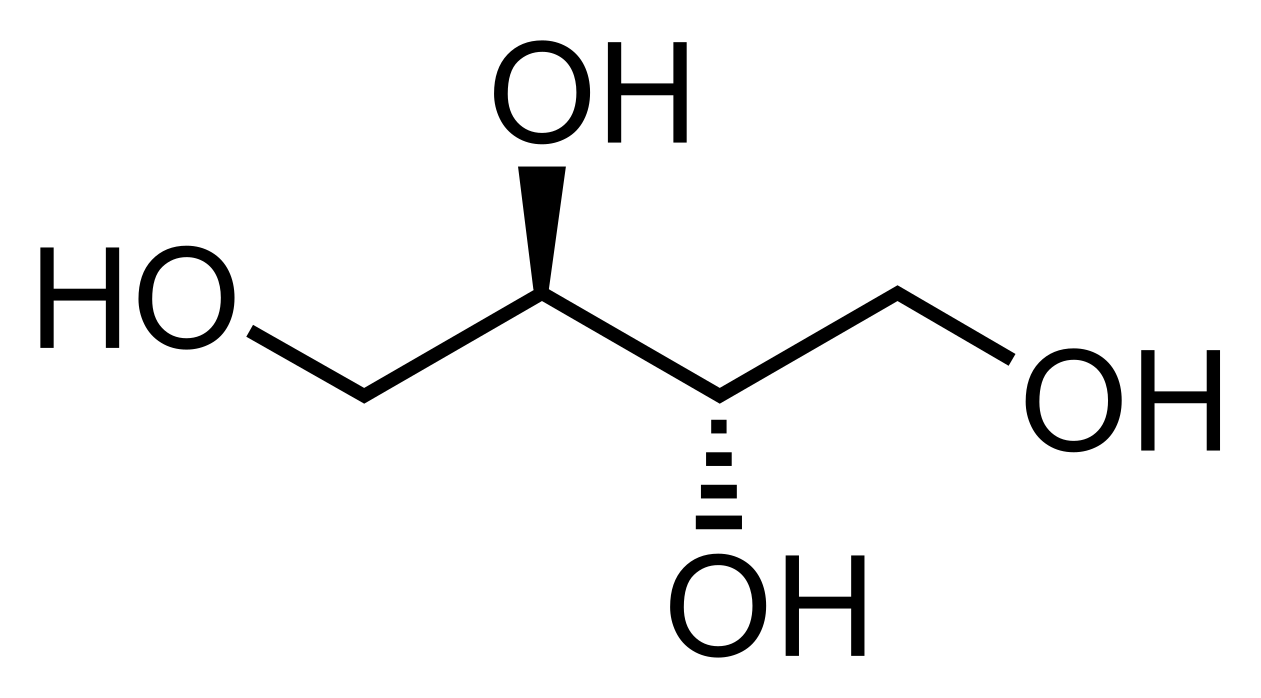
Structural formula of erythritol.
Credit: Su-no-G / Wikimedia Commons

License: Public domain
Rendered from SVG to PNG, whitespace trimmed and placed on white
What it is
Erythritol (CAS 149-32-6) is a sugar alcohol that is 60% to 80% as sweet as table sugar with fewer calories. [1,6] It is also made in the body as part of normal metabolism. [2]
What it does and why it is used
It adds sweetness and bulk without raising blood sugar as much as sugar and does not cause tooth decay. [1]
Regulatory status and health context
Canada
Erythritol is on Health Canada's List of Permitted Sweeteners, with limits such as 75% in chewing gum and 3.5% in dietetic drinks. [5]
United States
FDA permits sugar alcohols, including erythritol, as sugar substitutes and says it will continue to review new information on erythritol. [3] WHO's 2023 guideline against non-sugar sweeteners does not cover sugar alcohols such as erythritol. [4]
European Union
The EU law website was not fully available when this article was reviewed, so EU legal status was not checked and is not summarized here.
Environmental notes
The sources used for this review do not assess erythritol's environmental effects, so we do not summarize them here.
Quick facts
- CAS: 149-32-6. [6]
- Where: sweetener blends, low-sugar baked goods and drinks. [1]
- Main concern: unresolved link to blood clotting and heart events. [2,3]
- Most at risk: no specific group identified in the sources used.
Sources
All URLs were fetched on 2026-11-15; Health Canada and NIH pages were read with a separate web-reading tool because they did not respond to this review's direct requests. The EU law website was not fully available that day, so EU legislation could not be checked. Source publication dates differ from this draft's review date.
- MedlinePlus: Sweeteners - sugars.
- NIH Research Matters: Erythritol and cardiovascular events (2023).
- FDA: Aspartame and other sweeteners in food.
- WHO: WHO advises not to use non-sugar sweeteners for weight control (2023).
- Health Canada: List of Permitted Sweeteners.
- PubChem PUG REST: erythritol synonyms.