
Cleaning and laundryWater, air and residues
Hydrochloric acid: the strong acid in some toilet bowl cleaners and pool chemicals
CAS 7647-01-0.Also known as muriatic acid, hydrogen chloride solution, and HCl.
Editorial draft Last reviewed 15 November 2026 About 714 words
CC INDEX
How it works66/100 High
Hydrochloric acid causes well-described burns to the mouth, throat, stomach and eyes, and survivors of serious swallowing injuries face a high risk of oesophageal cancer. It is found in some toilet cleaners and pool chemicals, so accidents are plausible but not part of everyday exposure. Canada and the US regulate corrosive consumer chemicals, so the score sits in the high band.
An editorial summary of this article’s cited evidence. It isn’t medical advice or a personal risk estimate.
Age index
What is the age index?Which age groups are more affected by this chemical’s possible health issues, based on this article’s sources.
- Pregnancy Unborn babies Not well studied
- Infants 0 to 1 Not well studied
- Young children 1 to 5 Higher concern
- Children 6 to 12 Higher concern
- Teens 13 to 19 Moderate
- Adults 20 to 64 Moderate
- Older adults 65 and over Moderate
- Young children (higher concern): Brightly coloured toilet cleaners are a known poisoning risk for small children
- Children (higher concern): Strong acid burns the mouth, throat and eyes even in small amounts
- Strong acid burns can be serious at any age; the higher ratings reflect the greater chance that children swallow or splash household acids.

Illustration of a cleaning shelf. Hydrochloric acid is found in some toilet bowl cleaners and pool chemicals.
Credit: Chemical Century; AI-generated illustration
License: CC0 1.0
Illustration, not a photograph of a specific product. Resized and cropped for the web.
Some toilet bowl and porcelain cleaners, pool chemicals and soldering fluxes rely on hydrochloric acid. It works well on tough deposits, but that same power means it can burn skin, eyes and the inside of the mouth and throat. Most injuries happen when it is swallowed by accident, splashed or mixed with other products. With gloves, good ventilation and careful storage, the risks can usually be kept low.
Everyday exposure: where you meet it and how much
Hydrochloric acid is found in toilet bowl and other porcelain cleaners, pool chemicals, soldering fluxes and certain fertilizers. [1] Poisoning can occur when someone swallows it, breathes it in, or it touches the skin or eyes. [1] MedlinePlus notes more generally that toilet bowl cleaners can burn the eyes, mouth and throat. [2]
The same chemical also has small, controlled uses in food processing. [4]
Known and suspected harms
Evidence labels are editorial summaries, not individual risk predictions: established means recognized under the stated conditions; probable means a likely contribution with uncertainty; possible means limited evidence; disputed means assessors disagree. These labels do not describe how common an effect is.
- Established — burns inside the body: swallowing hydrochloric acid can burn the mouth and throat, causing severe pain, drooling, breathing difficulty from throat swelling, severe abdominal and chest pain, bloody vomiting and a rapid drop in blood pressure. [1]
- Established — skin and eye burns: contact can cause blisters, burns, pain and vision loss. [1]
- Established — breathing fumes: breathing it in can cause chest tightness, choking, coughing up blood, dizziness, shortness of breath and bluish lips and fingernails. [1]
- Established — lasting complications: holes in the oesophagus and stomach can lead to serious infections, and MedlinePlus says cancer of the oesophagus is a high risk in people who survive swallowing hydrochloric acid. [1]
Reducing avoidable exposure and harm
Use acid cleaners only as the label directs, with gloves and eye protection, and keep the room ventilated. Never mix acid cleaners with bleach or other products. Store them in their original containers, closed and out of children's reach. If someone swallows an acid or gets it in the eyes, get medical help at once; MedlinePlus advises flushing skin or eyes with lots of water for at least 15 minutes and not making the person vomit unless told to. [1]
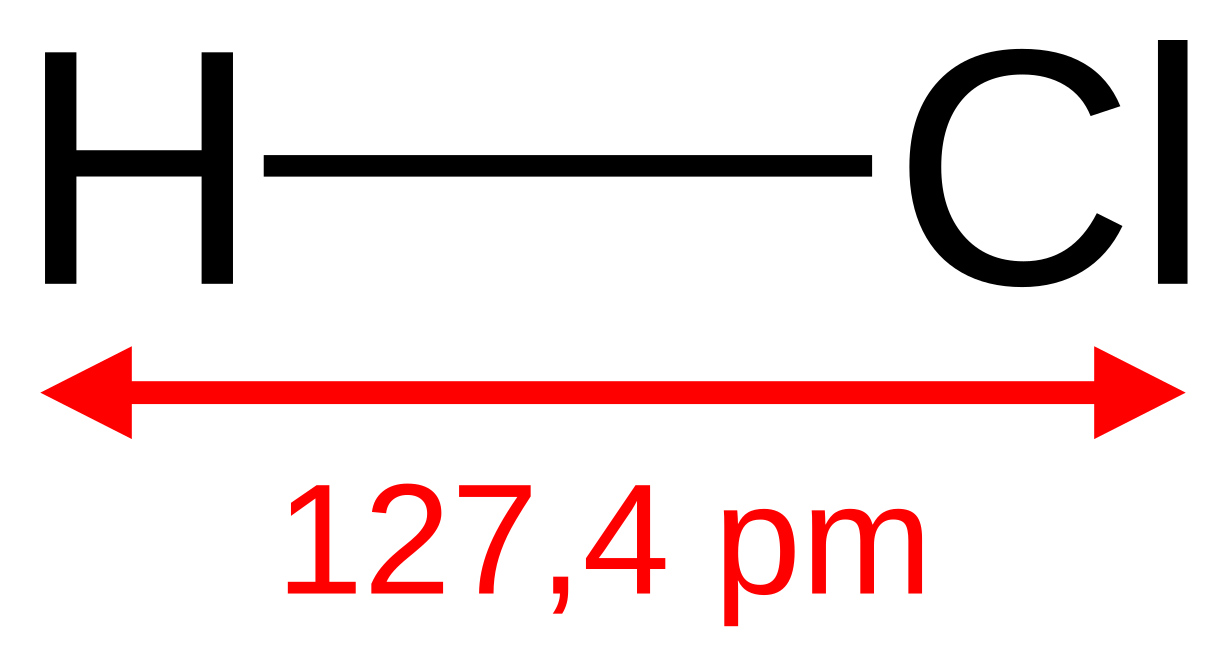
Hydrogen chloride molecule, which forms hydrochloric acid in water.
Credit: Streng and T.vanschaik / Wikimedia Commons

License: Public domain
Rendered from SVG to PNG, whitespace trimmed and placed on white
What it is
Hydrochloric acid (CAS 7647-01-0) is a solution of hydrogen chloride in water; it is also known as muriatic acid. [5]
What it does and why it is used
It is a strong acid, used in porcelain cleaners, pool chemicals and soldering fluxes. [1] FDA also lists it as generally recognized as safe for limited food-processing uses. [4]
Regulatory status and health context
Canada
Canada's Consumer Chemicals and Containers Regulations classify consumer chemical products by hazard and require child-resistant containers for products classed as corrosive. [3] They also ban consumer chemical products in the 'very corrosive' category, with a narrow exception for some glass-etching products. [3]
United States
FDA lists hydrochloric acid as generally recognized as safe for use as a buffer and neutralizing agent in food, under good manufacturing practice. [4]
European Union
The EU law website was not fully available when this article was reviewed, so EU legal status was not checked and is not summarized here.
Environmental notes
The sources used for this review focus on poisoning and do not assess hydrochloric acid's environmental effects, so we do not summarize them here.
Quick facts
- CAS: 7647-01-0. [4,5]
- Where: toilet bowl and porcelain cleaners, pool chemicals, soldering fluxes, certain fertilizers. [1]
- Main danger: burns to the mouth, throat, stomach, skin and eyes. [1]
- Most at risk: young children; anyone using strong acids without gloves or eye protection. [1,2]
Sources
All URLs were fetched on 2026-11-15. The EU law website was not fully available that day, so EU legislation could not be checked for this review. Source publication dates differ from this draft's review date.