
Nutrients and supplementsFood and drink
Iodine: the thyroid mineral in iodized salt, and why more is not better
CAS 7553-56-2.Also known as iodide, potassium iodide, and iodized salt.
Editorial draft Last reviewed 15 November 2026 About 743 words
CC INDEX
How it works44/100 Moderate
Too much iodine can cause goiter and thyroid inflammation, NIH links high intakes to thyroid cancer, and very large doses from non-food products can be poisonous. Exposure is widespread through iodized salt and food. Canada requires iodide in household table salt and upper limits guide intake, so the score sits in the moderate band.
An editorial summary of this article’s cited evidence. It isn’t medical advice or a personal risk estimate.
Age index
What is the age index?Which age groups are more affected by this chemical’s possible health issues, based on this article’s sources.
- Pregnancy Unborn babies Moderate
- Infants 0 to 1 Lower concern
- Young children 1 to 5 Higher concern
- Children 6 to 12 Moderate
- Teens 13 to 19 Lower concern
- Adults 20 to 64 Lower concern
- Older adults 65 and over Lower concern
- Young children (higher concern): MedlinePlus says children are especially sensitive to the effects of iodine.
- Pregnant and breastfeeding people need more iodine, 220 and 290 mcg a day. Upper limits are lower for children, starting at 200 mcg a day for ages 1 to 3, and no upper limit has been set for babies under a year.

Illustration of iodine sources. Iodized salt, seafood and seaweed provide iodine.
Credit: Chemical Century; AI-generated illustration
License: CC0 1.0
Illustration, not a photograph of a specific product. Resized and cropped for the web.
Iodine is a mineral the thyroid gland needs to make hormones, and in Canada table salt sold for household use must contain added iodide. Most people get enough from salt, seafood, dairy and eggs. Getting too much can cause some of the same thyroid problems as getting too little, and swallowing iodine products not meant as food can be harmful, especially for children. People who are pregnant may need more iodine than usual.
Everyday exposure: where you meet it and how much
Iodine comes from fish such as cod and tuna, seaweed, shrimp and other seafood, from dairy products and eggs, and from iodized salt. [1] Processed foods almost never contain iodized salt, and specialty salts such as sea salt and kosher salt are not usually iodized. [1] A quarter teaspoon of iodized salt has 78 micrograms of iodine. [3] Supplements usually contain potassium iodide or sodium iodide, and kelp supplements also contain iodine. [1] Non-food sources include tincture of iodine, Lugol's solution, potassium iodide, and some dyes, inks and photographic chemicals. [2]
Known and suspected harms
Evidence labels are editorial summaries, not individual risk predictions: established means recognized under the stated conditions; probable means a likely contribution with uncertainty; possible means limited evidence; disputed means assessors disagree. These labels do not describe how common an effect is.
- Established — thyroid problems from too much: high iodine levels can cause some of the same symptoms as deficiency, including goiter, and can cause thyroid gland inflammation. [1] Very high intake can reduce the function of the thyroid gland. [3]
- Probable — thyroid cancer: the NIH fact sheet says high iodine intakes can cause thyroid cancer. [1]
- Established — very large doses: several grams of iodine can cause burning of the mouth, throat and stomach, fever, nausea, vomiting, diarrhea, weak pulse and coma. [1] MedlinePlus says children are especially sensitive to the effects of iodine. [2]
- Established — medicine interactions: high-dose iodine with antithyroid medicines could cause too little thyroid hormone, and potassium iodide taken with ACE inhibitors or potassium-sparing diuretics can raise blood potassium to an unsafe level. [1]
Reducing avoidable exposure and harm
Keep total intake from food, drinks and supplements under the upper limit for your age, which is 1,100 mcg a day for adults, unless a doctor is giving you iodine for a medical reason. [1] If someone swallows a non-food iodine product, seek immediate medical help and contact poison control. [2]
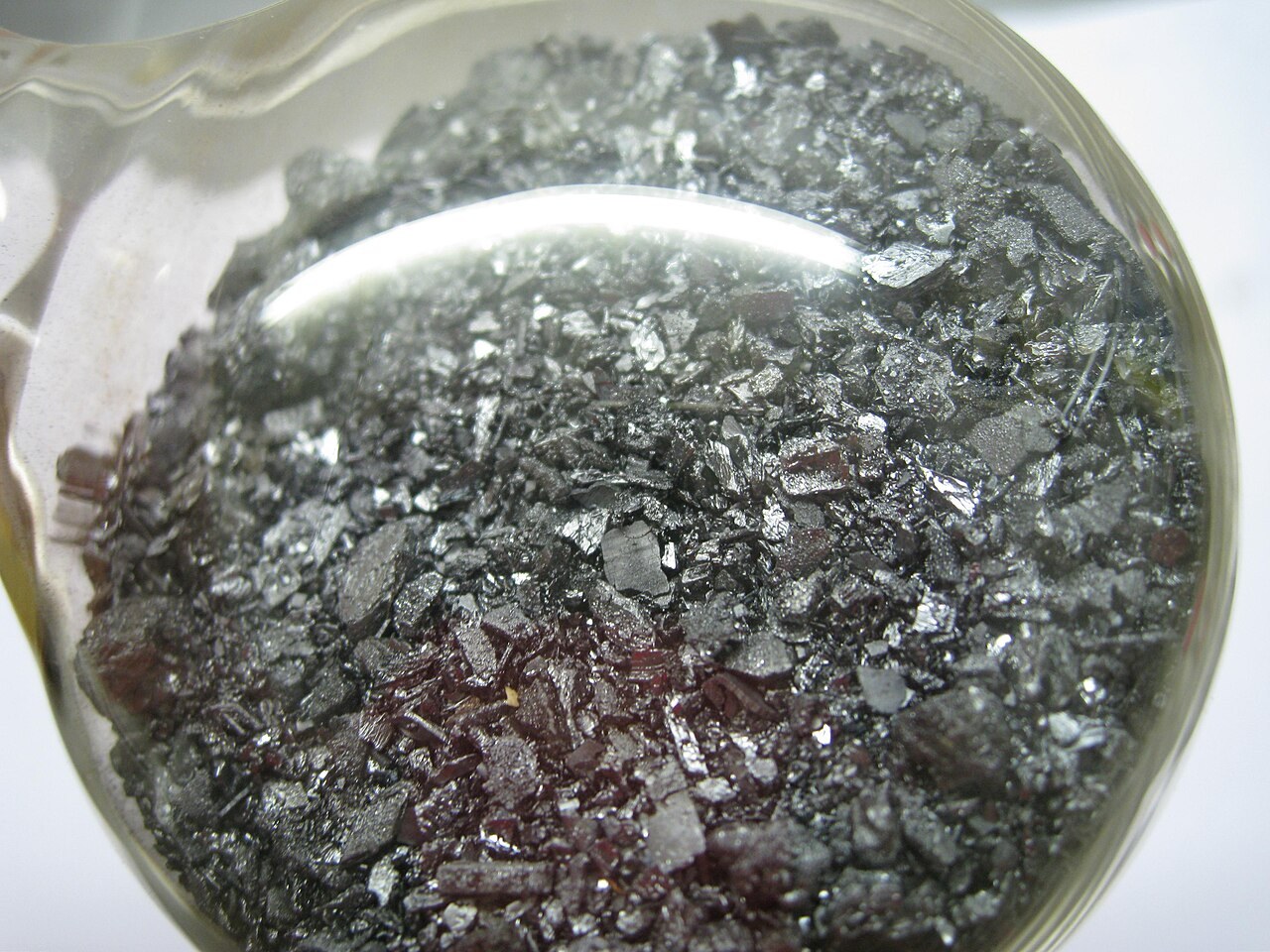
Iodine crystals in a sealed glass bottle.
Credit: Dnn87 / Wikimedia Commons

License: CC BY 3.0
Resized for the web; no content edits
What it is
Iodine (CAS 7553-56-2) is a naturally occurring element; in supplements it is usually present as potassium iodide or sodium iodide. [1,2,5]
What it does and why it is used
The body uses iodine to make thyroid hormones, which control metabolism and are needed for bone and brain development during pregnancy and infancy. [1]
Regulatory status and health context
Canada
Under Canada's Food and Drug Regulations, standardized salt sold for table or general household use must contain 0.01% potassium iodide, and the presence of iodide must be shown on the principal display panel. [4]
United States
The NIH Office of Dietary Supplements lists daily upper limits from all sources of 200 mcg for children aged 1 to 3, rising to 1,100 mcg for adults. [1] It notes that FDA has approved potassium iodide as a thyroid-blocking agent for radiation emergencies. [1]
European Union
The EU law website was not fully available when this article was reviewed, so EU legal status was not checked and is not summarized here.
Environmental notes
The sources used for this review do not assess iodine's environmental effects, so we do not summarize them here.
Quick facts
- CAS: 7553-56-2. [5]
- Where: iodized salt, seafood, dairy, eggs, supplements. [1]
- Main concern: thyroid problems from too much; harm from non-food iodine products. [1,2]
- Most at risk: young children; people on antithyroid medicines. [1,2]
Sources
All URLs were fetched on 2026-11-15; NIH Office of Dietary Supplements pages were read with a separate web-reading tool because they did not respond to this review's direct requests. The EU law website was not fully available that day, so EU legislation could not be checked. Source publication dates differ from this draft's review date.