
Cleaning and laundryMedicines and health
Isopropyl alcohol: rubbing alcohol is a handy disinfectant but a poison if swallowed
CAS 67-63-0.Also known as isopropanol, 2-propanol, and rubbing alcohol.
Editorial draft Last reviewed 14 November 2026 About 846 words
CC INDEX
How it works54/100 Moderate
Swallowing isopropyl alcohol causes well-described intoxication, and large amounts can lead to coma, internal bleeding and kidney failure. Rubbing alcohol is in many homes, but harmful exposure needs swallowing or misuse, so everyday exposure scores modestly. The sources describe few regulatory limits, so the score sits in the moderate band.
An editorial summary of this article’s cited evidence. It isn’t medical advice or a personal risk estimate.
Age index
What is the age index?Which age groups are more affected by this chemical’s possible health issues, based on this article’s sources.
- Pregnancy Unborn babies Not well studied
- Infants 0 to 1 Higher concern
- Young children 1 to 5 Higher concern
- Children 6 to 12 Moderate
- Teens 13 to 19 Moderate
- Adults 20 to 64 Moderate
- Older adults 65 and over Moderate
- Infants (higher concern): Absorbed through the skin; alcohol sponge baths can make children very sick
- Young children (higher concern): Absorbed through the skin; alcohol sponge baths can make children very sick
- Poisoning happens when isopropyl alcohol is swallowed or, in children, absorbed through the skin; ordinary use as directed on the skin or on surfaces is not the concern.

Illustration of a first-aid tray. Isopropyl alcohol is the main ingredient of rubbing alcohol and many alcohol swabs.
Credit: Chemical Century; AI-generated illustration
License: CC0 1.0
Illustration, not a photograph of a specific product. Resized and cropped for the web.
Rubbing alcohol is in almost every first-aid kit, on the swab before a needle and in many cleaning sprays. On the skin and on surfaces it does its job well, but it is not meant to be swallowed: drinking it can leave someone very drunk, dizzy and sick to the stomach, and large amounts can lead to coma. Children are especially at risk, both from sipping it and from old-fashioned sponge baths with alcohol to bring down a fever, because it passes through the skin. Storing it like any other poison and using it only as directed keeps it a useful tool.
Everyday exposure: where you meet it and how much
Isopropyl alcohol is used in some household products, medicines and cosmetics. [1] It is found in rubbing alcohol, typically 70% and up to 99% in some products, as well as alcohol swabs, cleaning supplies, paint thinners and perfumes. [1] It is not meant to be swallowed, and poisoning occurs when someone swallows it, either by accident or on purpose. [1]
It can also harm through the skin and eyes: it can damage the cornea, and it is absorbed through the skin, which is why sponge-bathing a feverish child with it is dangerous. [1]
Known and suspected harms
Evidence labels are editorial summaries, not individual risk predictions: established means recognized under the stated conditions; probable means a likely contribution with uncertainty; possible means limited evidence; disputed means assessors disagree. These labels do not describe how common an effect is.
- Established — intoxication if swallowed: drinking isopropyl alcohol will most likely make a person very drunk, with symptoms such as slurred speech, uncoordinated movement, dizziness, headache, nausea and vomiting (sometimes with blood), low blood pressure, low blood sugar, low body temperature and slowed breathing. [1] Recovery is very likely if a person does not swallow a large amount. [1]
- Established — coma and organ damage from large amounts: drinking large amounts can lead to coma and possibly brain damage, internal bleeding, breathing difficulty and kidney failure. [1]
- Established — children absorbing it through the skin: it is dangerous to give a child a sponge bath with isopropyl alcohol to reduce a fever, because it is absorbed through the skin and can make children very sick. [1]
- Established — eye injury: contact can cause burns and damage to the cornea, the clear covering at the front of the eye. [1]
Reducing avoidable exposure and harm
Use rubbing alcohol only on the skin or on surfaces as the label directs, keep it closed and out of children's reach, and never use it to sponge a child with a fever. [1] If it gets on the skin or in the eyes, flush with plenty of water for at least 15 minutes. [1] If it was swallowed, seek medical help right away; do not make the person throw up, and give water or milk only if a provider has not said otherwise and the person can swallow safely. [1] When choosing hand sanitizer, FDA has kept a list of specific products consumers should not use, mainly because some were found to contain the more toxic alcohol methanol; that list is no longer being updated, so FDA now points consumers to its recalls database. [2]
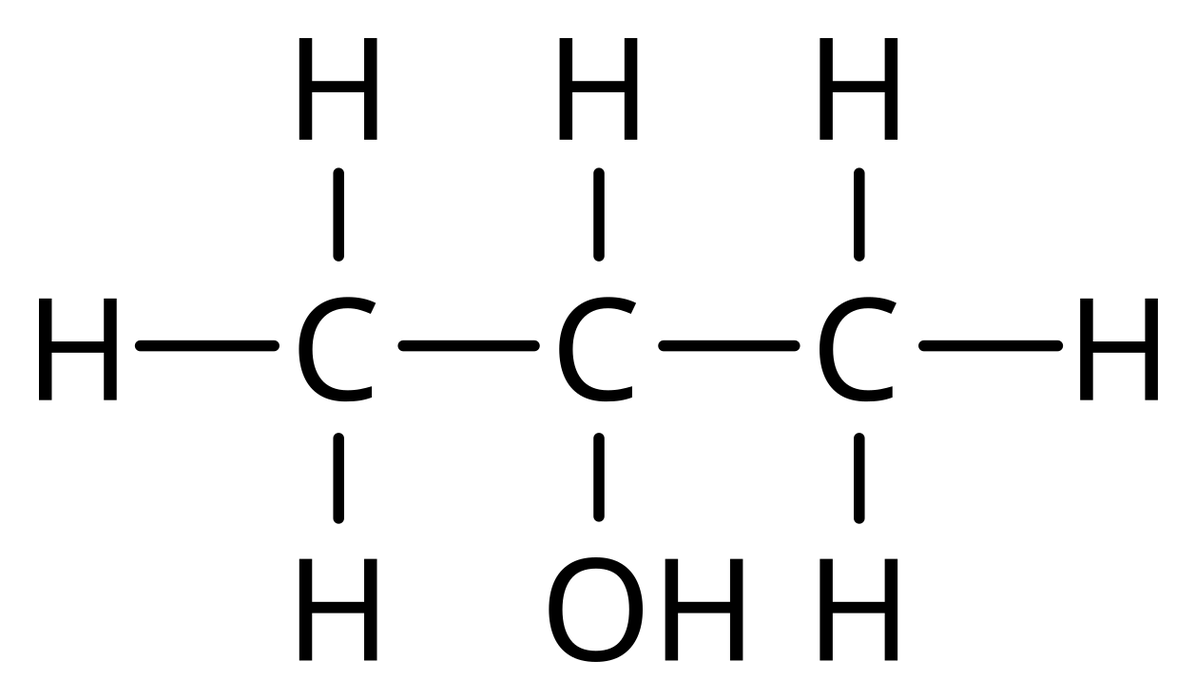
Skeletal structure of isopropyl alcohol (2-propanol).
Credit: Innerstream / Wikimedia Commons

License: Public domain
Rendered from SVG to PNG, whitespace trimmed and placed on white
What it is
Isopropyl alcohol (CAS 67-63-0), also called isopropanol or 2-propanol, is a type of alcohol. [1,3] It is different from the alcohol in drinks and from methanol. [1,2]
What it does and why it is used
It is used as a skin disinfectant in rubbing alcohol and swabs, as a cleaning solvent, and as an ingredient in some medicines, cosmetics and perfumes. [1] FDA's hand-sanitizer guidance refers to alcohol (ethanol) and isopropyl alcohol as the alcohols used to make these products. [2]
Regulatory status and health context
Canada
The sources used for this review do not cover isopropyl alcohol's status in Canada, so we do not summarize it here.
United States
FDA issued guidance in January 2021 asking drug manufacturers to test alcohol and isopropyl alcohol for methanol contamination before using them to make drugs, including hand sanitizer, and maintained a list of hand sanitizers consumers should not use. [2]
European Union
The sources used for this review do not cover isopropyl alcohol's status in the European Union, so we do not summarize it here.
Environmental notes
The sources used for this review focus on poisoning and do not assess isopropyl alcohol's environmental effects, so we do not summarize them here.
Quick facts
- CAS: 67-63-0. [3]
- Where: rubbing alcohol, alcohol swabs, cleaners, paint thinners, perfumes. [1]
- Main danger: intoxication and, in large amounts, coma and organ damage if swallowed. [1]
- Most at risk: children, who can be poisoned by swallowing it or through the skin. [1]
Sources
All URLs were fetched on 2026-11-14. Source publication dates differ from this draft's review date.