
Fragrance and flavourMedicines and health
Menthol: the cooling mint compound in cough drops and rubs that is harmful only in large amounts
CAS 89-78-1.Also known as peppermint camphor and mint camphor.
Editorial draft Last reviewed 14 November 2026 About 770 words
CC INDEX
How it works34/100 Mild
Swallowing pure menthol or concentrated peppermint oil can cause serious symptoms, but pure menthol is hard to get and everyday products are diluted. Exposure through food, gum, mouthwash and cold remedies is very common but low-dose. Few regulatory limits appear in the sources, so the score sits in the mild band.
An editorial summary of this article’s cited evidence. It isn’t medical advice or a personal risk estimate.
Age index
What is the age index?Which age groups are more affected by this chemical’s possible health issues, based on this article’s sources.
- Pregnancy Unborn babies Not well studied
- Infants 0 to 1 Not well studied
- Young children 1 to 5 Not well studied
- Children 6 to 12 Not well studied
- Teens 13 to 19 Not well studied
- Adults 20 to 64 Lower concern
- Older adults 65 and over Not well studied
- The sources describe poisoning from swallowing pure menthol or peppermint oil but do not compare risk by age; ordinary products are diluted.

Illustration of mint leaves, lozenges and tea. Menthol gives peppermint its cooling feel.
Credit: Chemical Century; AI-generated illustration
License: CC0 1.0
Illustration, not a photograph of a specific product. Resized and cropped for the web.
Menthol is the cool tingle in mint candy, chewing gum, cough drops, mouthwash and the rubs many of us reach for during a cold. The amounts in these everyday products are small and watered down, and for most people they simply feel soothing. Trouble comes when someone swallows a large amount of pure menthol or concentrated peppermint oil, which can upset the stomach and, in serious cases, cause dizziness, shaking or seizures. Some people may also react to menthol in fragranced products, which is why Europe now treats it as a possible skin allergen.
Everyday exposure: where you meet it and how much
Menthol adds peppermint flavour to candy and other products and is used in some skin lotions and ointments. [1] MedlinePlus lists breath fresheners, candy, gum, cough drops, cold sore medicines, anti-itch creams and lotions, inhalants, lozenges and ointments for nasal congestion, medicines for a sore mouth or throat, mouthwashes, ointments for aches and pains, cigarettes and peppermint oil. [1] Peppermint oil is also used to flavour products, as an antiseptic and numbing agent, and in herbal medicine to relieve spasms. [2]
Pure menthol is not easy to get; the menthol in many over-the-counter products is usually watered down and mixed with other ingredients. [1]
Known and suspected harms
Evidence labels are editorial summaries, not individual risk predictions: established means recognized under the stated conditions; probable means a likely contribution with uncertainty; possible means limited evidence; disputed means assessors disagree. These labels do not describe how common an effect is.
- Established — poisoning from swallowing large amounts of pure menthol: menthol can be harmful in large amounts. [1] Symptoms can include abdominal pain, nausea, vomiting and diarrhea, rapid or pounding heartbeat, rapid or shallow breathing, dizziness, tremor, unsteady walking, convulsions, unconsciousness, blood in the urine and no urine output. [1]
- Established — peppermint oil overdose: menthol is the ingredient in peppermint oil that can be poisonous in large amounts. [2] An overdose can cause slow heartbeat, breathing changes, vomiting and diarrhea, twitching, convulsions and unconsciousness; kidneys that are damaged may take several months to heal, and long-term lung injury can also occur. [2]
- Possible — fragrance allergy: FDA notes that a 2023 EU amendment added menthol to the list of fragrance substances treated as allergens in cosmetics. [3] FDA explains that allergic reactions to cosmetics most often appear as itchy, red rashes. [3]
Reducing avoidable exposure and harm
Use menthol products as labelled and keep concentrated peppermint oil and other essential oils closed and out of children's reach. [1,2] If someone swallows a large amount, seek medical help right away and bring the container; for peppermint oil, do not make the person throw up unless told to. [1,2] How well someone does depends on how much was swallowed, how quickly they are treated and, for over-the-counter products, the other ingredients in the product. [1] People who notice rashes from fragranced products can ask a clinician about patch testing. [3]
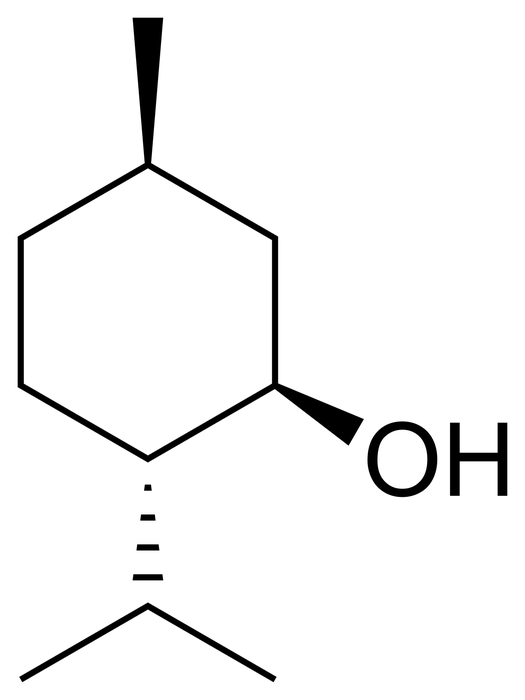
Skeletal structure of menthol.
Credit: Daveryan / Wikimedia Commons

License: Public domain
Rendered from SVG to PNG, whitespace trimmed and placed on white
What it is
Menthol (CAS 89-78-1) is the compound that gives peppermint its cooling flavour; it is the main poisonous ingredient in peppermint oil when large amounts are swallowed. [1,2,4]
What it does and why it is used
It is used for its cooling, minty taste and feel in candy, gum, breath fresheners and mouthwash, and in medicines for coughs, nasal congestion, itching, sore throats and aches. [1]
Regulatory status and health context
Canada
The sources used for this review do not cover menthol's status in Canada, so we do not summarize it here.
United States
FDA's cosmetics allergen page notes that fragrance ingredients may not be identified individually on US cosmetic labels. [3] The sources used for this review do not cover other US rules for menthol.
European Union
FDA reports that a 2023 amendment to the EU's cosmetic fragrance allergen list added menthol. [3] The EU legal text itself was not reviewed for this article.
Environmental notes
The sources used for this review do not assess menthol's environmental effects, so we do not summarize them here.
Quick facts
- CAS: 89-78-1. [4]
- Where: mint candy and gum, cough drops, mouthwash, rubs and ointments, peppermint oil. [1,2]
- Main danger: poisoning if large amounts of pure menthol or peppermint oil are swallowed. [1,2]
- Most at risk: anyone who swallows concentrated products; people allergic to fragrance ingredients. [1,3]
Sources
All URLs were fetched on 2026-11-14. Source publication dates differ from this draft's review date.