
Cleaning and laundryHousehold materials
Methanol: the wood alcohol in windshield washer fluid that can cause blindness
CAS 67-56-1.Also known as methyl alcohol and wood alcohol.
Editorial draft Last reviewed 14 November 2026 About 766 words
CC INDEX
How it works70/100 High
Methanol poisoning is well documented and severe: small amounts can kill a child and blindness is common and often permanent. Household exposure is mostly through stored automotive products and is usually accidental, so everyday exposure scores low. US rules require child-resistant packaging and FDA treats methanol as unacceptable in any drug, so the score sits in the high band.
An editorial summary of this article’s cited evidence. It isn’t medical advice or a personal risk estimate.
Age index
What is the age index?Which age groups are more affected by this chemical’s possible health issues, based on this article’s sources.
- Pregnancy Unborn babies Not well studied
- Infants 0 to 1 Not well studied
- Young children 1 to 5 Higher concern
- Children 6 to 12 Higher concern
- Teens 13 to 19 Moderate
- Adults 20 to 64 Moderate
- Older adults 65 and over Moderate
- Young children (higher concern): May mistake washer fluid for juice; a small amount can be deadly
- Children (higher concern): A small amount can be deadly for a child
- Methanol is extremely poisonous at any age; children are singled out because much smaller amounts can be deadly for them.

Illustration of windshield washer fluid in a home garage. Washer fluid is made mostly of methanol.
Credit: Chemical Century; AI-generated illustration
License: CC0 1.0
Illustration, not a photograph of a specific product. Resized and cropped for the web.
Methanol is the main ingredient in the brightly coloured windshield washer fluid many families keep in the garage, and it is also found in fuel additives, de-icers and some paint removers. It looks harmless, and young children can mistake washer fluid for juice, but a small swallow can be deadly for a child and can leave an adult with permanent vision loss. FDA has also warned about hand sanitizers found to contain it, a reminder that it can turn up where people least expect it. Keeping these products sealed, labelled and out of reach, and getting help fast after any swallow, matters a great deal.
Everyday exposure: where you meet it and how much
Methanol is a non-drinking alcohol used for industrial and automotive purposes. [1] It is found in windshield washer fluid, antifreeze, de-icing fluid, fuel additives, canned heating sources, copy machine fluids, paint removers and thinners, shellac and varnish. [1] Windshield washer fluid is a brightly coloured liquid made of methanol, sometimes with small amounts of other toxic alcohols such as ethylene glycol, and young children may mistake it for juice. [2]
Methanol has also turned up where it should not be: FDA has warned consumers not to use certain hand sanitizers, in many cases because they contained methanol. [3]
Known and suspected harms
Evidence labels are editorial summaries, not individual risk predictions: established means recognized under the stated conditions; probable means a likely contribution with uncertainty; possible means limited evidence; disputed means assessors disagree. These labels do not describe how common an effect is.
- Established — vision loss and blindness: poisoning can cause blurred vision and complete or partial blindness, sometimes described as "snow blindness"; blindness is common and often permanent despite medical care. [1,2]
- Established — death from small amounts: methanol is extremely poisonous; as little as 2 tablespoons (30 millilitres) can be deadly to a child, and about 2 to 8 ounces (60 to 240 millilitres) can be deadly for an adult. [1,2]
- Established — damage to many organs: other effects include breathing difficulty, low blood pressure, confusion, seizures, coma, severe abdominal pain, liver problems, pancreatitis and bloody vomiting, and organ damage may be permanent. [1]
- Established — unacceptable in medicines: FDA states that methanol is not an acceptable ingredient for any drug and should not be used because of its toxic effects. [3]
Reducing avoidable exposure and harm
Store washer fluid, antifreeze, fuel additives and other methanol products in their original containers, tightly closed and out of children's reach; never pour them into drink bottles. [1,2] US rules require child-resistant packaging for liquid household products containing 4% or more methanol, other than pressurized sprays. [4] If someone may have swallowed methanol, seek medical help immediately and do not make them throw up unless told to; treatment can include antidotes and dialysis, and how well a person does depends on how much was swallowed and how soon treatment starts. [1,2] Check hand sanitizers against FDA's recall information. [3]
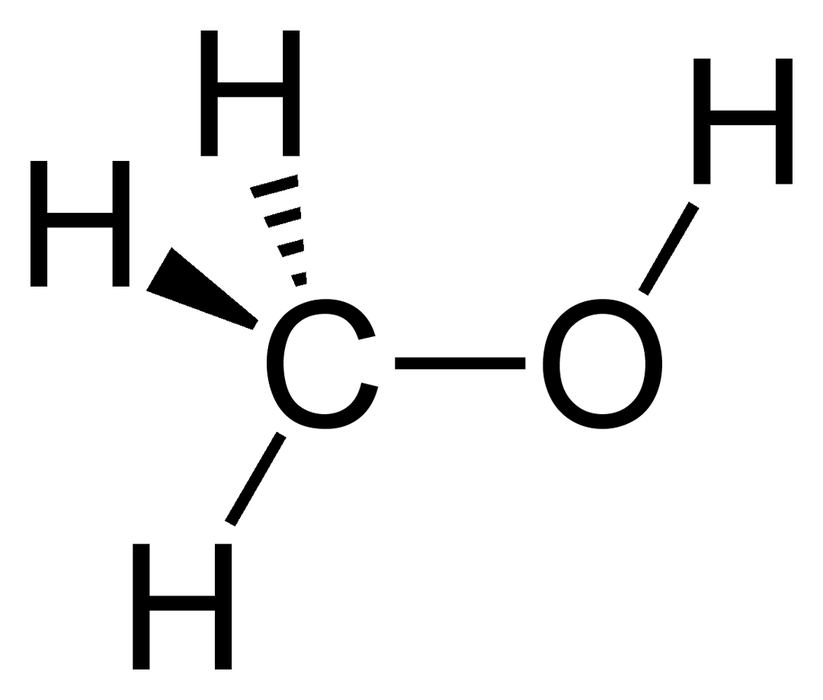
Structural formula of methanol.
Credit: Ben Mills / Wikimedia Commons

License: Public domain
Whitespace trimmed and placed on white
What it is
Methanol (CAS 67-56-1), also called methyl alcohol or wood alcohol, is a simple alcohol. [1,2,5] It is not the alcohol in drinks. [1]
What it does and why it is used
It is used as a solvent and fuel ingredient and to keep windshield washer and de-icing fluids from freezing. [1,2]
Regulatory status and health context
Canada
The sources used for this review do not cover methanol's status in Canada, so we do not summarize it here.
United States
Household liquids with 4% or more methanol must use child-resistant packaging. [4] FDA has told drug makers to test alcohol and isopropyl alcohol for methanol contamination before making drugs, including hand sanitizer, after finding contaminated products. [3]
European Union
The sources used for this review do not cover methanol's status in the European Union, so we do not summarize it here.
Environmental notes
The sources used for this review focus on poisoning and do not assess methanol's environmental effects, so we do not summarize them here.
Quick facts
- CAS: 67-56-1. [5]
- Where: windshield washer fluid, antifreeze, de-icers, fuel additives, paint removers; some recalled hand sanitizers. [1,2,3]
- Main danger: blindness and death after swallowing. [1,2]
- Most at risk: young children, for whom small amounts can be deadly. [1,2]
Sources
All URLs were fetched on 2026-11-14. Source publication dates differ from this draft's review date.