
Methylene chloride: the paint-stripper solvent linked to deaths in closed rooms
CAS 75-09-2.Also known as dichloromethane and DCM.
Editorial draft Last reviewed 14 November 2026 About 790 words
CC INDEX
How it works64/100 High
Methylene chloride vapours have caused deaths during paint and coating removal, which led to a US ban on consumer paint-stripping products. Household exposure is now less common but still possible through old stock and other products. Regulators in several jurisdictions restrict it, so the score sits in the high band.
An editorial summary of this article’s cited evidence. It isn’t medical advice or a personal risk estimate.
Age index
What is the age index?Which age groups are more affected by this chemical’s possible health issues, based on this article’s sources.
- Pregnancy Unborn babies Not well studied
- Infants 0 to 1 Not well studied
- Young children 1 to 5 Not well studied
- Children 6 to 12 Not well studied
- Teens 13 to 19 Not well studied
- Adults 20 to 64 Higher concern
- Older adults 65 and over Not well studied
- Adults (higher concern): Deaths reported during paint and coating removal
- The documented deaths occurred in adults using paint strippers, often at work; the sources do not compare risk by age.

Illustration of a furniture-stripping project in a ventilated garage. Methylene chloride was long used in paint strippers.
Credit: Chemical Century; AI-generated illustration
License: CC0 1.0
Illustration, not a photograph of a specific product. Resized and cropped for the web.
Methylene chloride is a fast-evaporating solvent that was long the active ingredient in many paint and varnish strippers, and it still turns up in some adhesives, degreasers and automotive products. Its vapours can build up in small, closed rooms, and people stripping paint or refinishing bathtubs have died from breathing them. That is why the US stopped its sale for consumer paint and coating removal in 2019. If an old can of stripper is sitting in the garage, the safer move is to stop using it and ask your local waste agency how to dispose of it.
Everyday exposure: where you meet it and how much
Methylene chloride, also known as dichloromethane, is a volatile chemical used in industrial, commercial and consumer applications such as adhesives, sealants, degreasers, cleaners and automobile products. [1] It is a colourless liquid with a chloroform-like odour, used in industries including paint stripping, pharmaceutical manufacturing and metal cleaning and degreasing. [2] Breathing it in and skin contact are the most common ways people are exposed. [2]
Consumer paint and coating removers were a major source of household exposure until US rules ended their sale for that purpose after November 22, 2019. [1]
Known and suspected harms
Evidence labels are editorial summaries, not individual risk predictions: established means recognized under the stated conditions; probable means a likely contribution with uncertainty; possible means limited evidence; disputed means assessors disagree. These labels do not describe how common an effect is.
- Established — deaths from breathing vapours: EPA banned methylene chloride for consumer paint and coating removal because of the acute fatalities that resulted from exposure during that use. [1] OSHA describes a worker who died while refinishing a bathtub in a home bathroom with a paint-stripping product containing methylene chloride. [2]
- Established — poisoning from paint removers: MedlinePlus lists symptoms from swallowing or sniffing paint, lacquer and varnish removers that can contain methylene chloride and other solvents, including breathing difficulty, dizziness, a drunk feeling, confusion, seizures, coma, burns of the throat and esophagus, and collapse. [3]
- Possible — cancer: OSHA considers methylene chloride a potential occupational carcinogen. [2]
Reducing avoidable exposure and harm
EPA encourages consumers to stop using any methylene chloride paint and coating removers they may already have and to ask state or local solid waste agencies how to dispose of leftover products. [1] For other products, check labels for methylene chloride or dichloromethane, work outdoors or with strong ventilation, and avoid using solvent products in small closed rooms such as bathrooms. [1,2] If someone swallows or breathes in paint remover, seek medical help right away. [3]
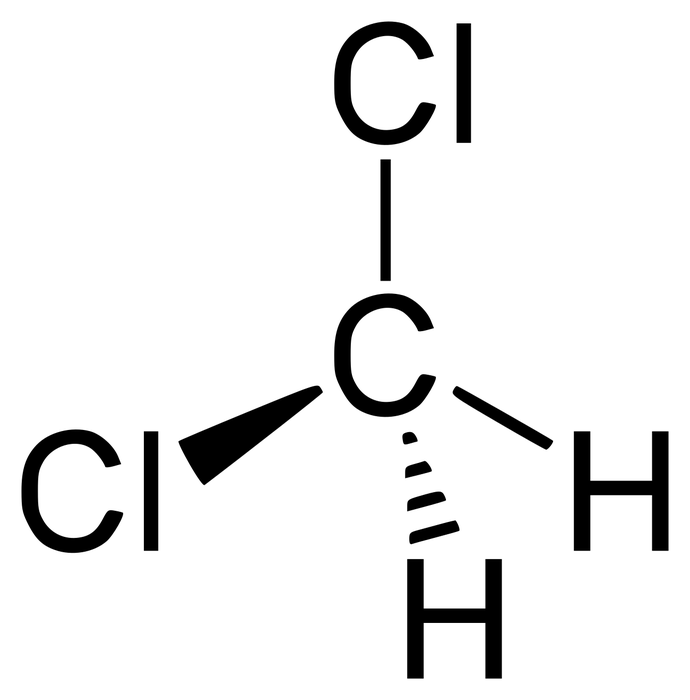
Skeletal structure of methylene chloride (dichloromethane).
Credit: Yikrazuul / Wikimedia Commons

License: Public domain
Rendered from SVG to PNG, whitespace trimmed and placed on white
What it is
Methylene chloride (CAS 75-09-2), also called dichloromethane, is a volatile, colourless liquid solvent. [2,6]
What it does and why it is used
It dissolves paints, coatings, grease and adhesives, which is why it has been used in paint strippers, degreasers, adhesives and some automotive products. [1,2]
Regulatory status and health context
Canada
Health Canada's Cosmetic Ingredient Hotlist says methylene chloride is not permitted in aerosol cosmetic products. [4]
United States
EPA's 2019 rule prohibits making, importing, processing and distributing methylene chloride for consumer paint and coating removal. [1] A broader 2024 EPA rule was vacated by a federal appeals court in September 2026 and is no longer in effect; the decision did not affect the 2019 rule or OSHA workplace requirements and exposure limits. [1]
European Union
The EU cosmetics regulation, as originally published in 2009, allowed dichloromethane in cosmetics up to 35% (including when mixed with 1,1,1-trichloroethane) with a 0.2% limit as an impurity. [5] Later amendments were not checked for this review.
Environmental notes
The sources used for this review do not assess methylene chloride's environmental effects, so we do not summarize them here.
Quick facts
- CAS: 75-09-2. [6]
- Where: old paint strippers; some adhesives, sealants, degreasers, cleaners and automotive products. [1]
- Main danger: death from breathing vapours, especially in enclosed spaces. [1,2]
- Most at risk: people stripping paint or refinishing surfaces indoors, including workers. [1,2]
Sources
All URLs were fetched on 2026-11-14, except the Health Canada Hotlist and the EU cosmetics regulation, which did not respond to this review's requests; those were read from copies fetched for earlier Chemical Century articles in November 2026. The EU text is the regulation as originally published, and later amendments were not checked. Source publication dates differ from this draft's review date.
- US EPA: Risk management for methylene chloride.
- US OSHA: Methylene chloride.
- MedlinePlus: Paint, lacquer, and varnish remover poisoning.
- Health Canada: Cosmetic Ingredient Hotlist, prohibited and restricted ingredients.
- EUR-Lex: Regulation (EC) No 1223/2009 on cosmetic products, as originally published.
- PubChem PUG REST: dichloromethane synonyms.