
Nonylphenol ethoxylates (NPEs): detergent chemicals that break down into hormone mimics
Also known as NPEs, NPEOs, nonylphenol polyethoxylate, nonoxynol, nonylphenol, NP, alkylphenol ethoxylates, and APEs.
Editorial draft Last reviewed 21 November 2026 About 651 words
CC INDEX
How it works47/100 Moderate
NPEs and their breakdown product nonylphenol are well documented as harmful to aquatic life, and nonylphenol is estrogenic in laboratory tests and found in human samples. Use in household detergents has dropped sharply because of regulation and voluntary phase-outs.
An editorial summary of this article’s cited evidence. It isn’t medical advice or a personal risk estimate.
Age index
What is the age index?Which age groups are more affected by this chemical’s possible health issues, based on this article’s sources.
- Pregnancy Unborn babies Not well studied
- Infants 0 to 1 Not well studied
- Young children 1 to 5 Not well studied
- Children 6 to 12 Not well studied
- Teens 13 to 19 Not well studied
- Adults 20 to 64 Not well studied
- Older adults 65 and over Not well studied
- Human health effects have not been established for any age group; the documented harms are environmental and in animal or laboratory studies.

Illustration of laundry and a river. NPEs go down the drain and break down into nonylphenol in waterways.
Credit: Chemical Century; AI-generated illustration
License: CC0 1.0
Illustration, not a photograph of a specific product. Resized and cropped for the web.
Nonylphenol ethoxylates are detergent ingredients that once were common in laundry products and industrial cleaners, and textiles can still release them in the wash. The main harm is downstream: after they go down the drain, they break down into nonylphenol, which lasts in rivers, is extremely toxic to fish and other water life, and acts like a weak estrogen in lab tests. Nonylphenol has also been detected in human breast milk, blood and urine. Canada, the US and Europe have all pushed to phase these chemicals out, so most household detergents now use alternatives.
Everyday exposure: where you meet it and how much
NPEs are nonionic surfactants used in a wide variety of industrial applications and consumer products. Many uses, such as laundry detergents, are "down-the-drain" applications; others, such as dust-control agents and de-icers, release them directly to the environment. [1] Textile articles can release NPEs into water when they are washed, which led the EU to restrict them in washable textiles. [2]
People are mostly exposed indirectly. EPA notes that nonylphenol has been detected in human breast milk, blood and urine. [1]
Known and suspected harms
Evidence labels are editorial summaries, not individual risk predictions: established means recognized under the stated conditions; probable means a likely contribution with uncertainty; possible means limited evidence; disputed means assessors disagree.
- Established — toxic to aquatic life: EPA states that NPEs are highly toxic to aquatic organisms and break down into nonylphenol, which is persistent in water, moderately bioaccumulative and extremely toxic to aquatic organisms. [1]
- Possible — hormone-like effects: EPA notes that nonylphenol has shown estrogenic properties in laboratory and animal tests and is associated with reproductive and developmental effects in rodents. [1]
The sources used here do not establish health effects in people from household exposure.
Reducing avoidable exposure
Canada reports that NPE use in soap and cleaning products has fallen by 96% since 1998, so most household products already avoid them. If you want to check, look for "nonylphenol ethoxylate" or "nonoxynol" on ingredient lists. EPA's Safer Choice program identified eight safer alternatives to NPEs. [1,3]
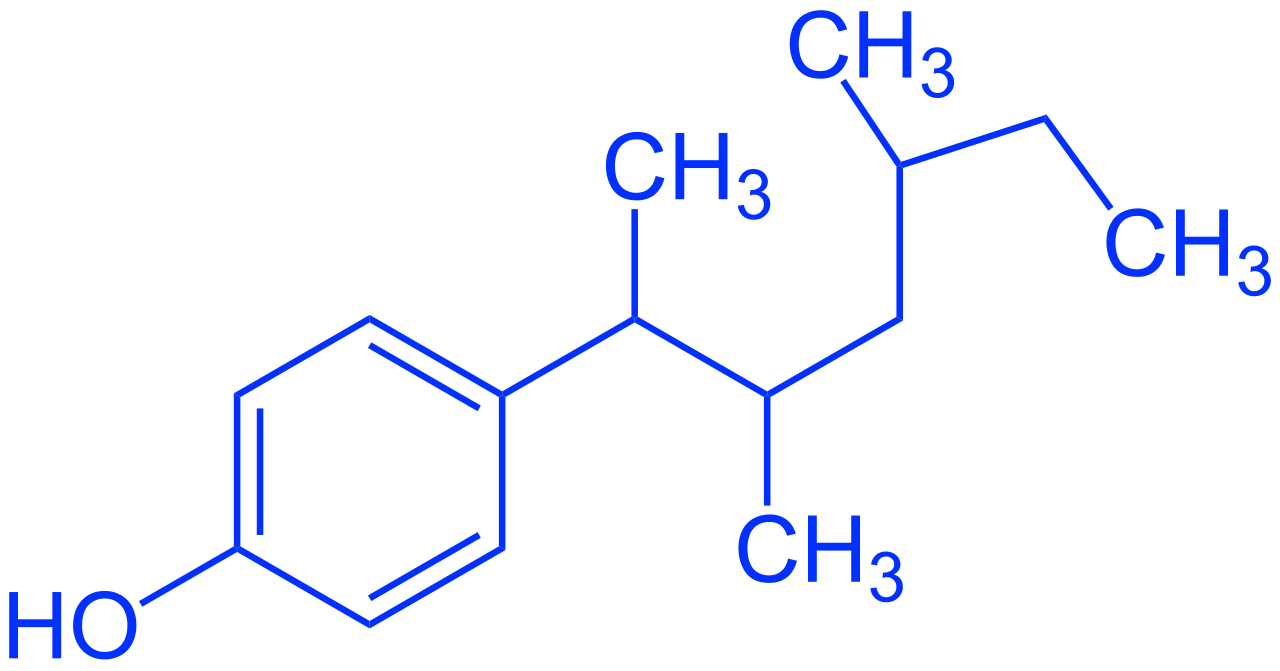
Structural formula of nonylphenol, the breakdown product of NPEs.
Credit: Jü / Wikimedia Commons

License: Public domain
Wikimedia-provided scaled PNG/JPEG rendering; no content edits
What it is
NPEs are made from nonylphenol, a phenol with a nine-carbon chain; making NPEs is nonylphenol's main use. In the environment, NPEs break back down into nonylphenol. [1]
What it does and why it is used
They are surfactants: they help water lift oil and dirt, which is why they were used in detergents, cleaners, textile processing and other industrial uses. [1,2]
Regulatory status and health context
Canada
Under a pollution prevention planning notice for soap and cleaning products, Canada set a target to reduce NPE use by 95% and reported a 96% reduction compared with 1998. [3]
United States
US industry agreed to a voluntary phase-out of NPEs in industrial laundry detergents by 2013 for liquids and 2014 for powders. EPA has also proposed a significant new use rule for these chemicals. [1]
European Union
Since 3 February 2021, washable textile articles containing NPEs at 0.01% by weight or more may not be placed on the EU market. [2]
Environmental notes
NPEs and nonylphenol have been found in fresh water, salt water, groundwater, sediment, soil and aquatic life. [1]
Quick facts
- Type: nonionic surfactants. [1]
- Breakdown product: nonylphenol, persistent and extremely toxic to aquatic life. [1]
- Hormone activity: estrogenic in laboratory tests (possible). [1]
- Canada: 96% reduction in soap and cleaning products. [3]
- EU: 0.01% limit in washable textiles since 2021. [2]
Sources
Sources were accessed on 2026-11-21. Source publication dates differ from this draft's review date. Image licences are listed with each image.
- US EPA: Risk management for nonylphenol and nonylphenol ethoxylates.
- European Commission: Regulation (EU) 2016/26 restricting nonylphenol ethoxylates in textile articles (EUR-Lex).
- Environment and Climate Change Canada: Nonylphenol and its ethoxylates in products, pollution prevention planning notice overview.