
Makeup and colourSkin and personal care
Octinoxate: what we know about this chemical sunscreen filter
CAS 5466-77-3.Also known as octyl methoxycinnamate, ethylhexyl methoxycinnamate, 2-ethylhexyl 4-methoxycinnamate, OMC, and EHMC.
Editorial draft Last reviewed 21 November 2026 About 711 words
CC INDEX
How it works43/100 Moderate
Octinoxate is widely used and reaches the bloodstream, but no harm in people has been shown. FDA has asked for more safety data, and Hawaii restricts its sale for environmental reasons.
An editorial summary of this article’s cited evidence. It isn’t medical advice or a personal risk estimate.
Age index
What is the age index?Which age groups are more affected by this chemical’s possible health issues, based on this article’s sources.
- Pregnancy Unborn babies Not well studied
- Infants 0 to 1 Not well studied
- Young children 1 to 5 Not well studied
- Children 6 to 12 Not well studied
- Teens 13 to 19 Not well studied
- Adults 20 to 64 Not well studied
- Older adults 65 and over Not well studied
- Absorption has been measured in adults; the effects of that absorption are not known for any age group.

Illustration of sunscreen at the beach. Octinoxate is a common chemical sunscreen filter.
Credit: Chemical Century; AI-generated illustration
License: CC0 1.0
Illustration, not a photograph of a specific product. Resized and cropped for the web.
Octinoxate is a chemical sunscreen filter used in many sunscreens and other products that protect skin from ultraviolet light. A US clinical study found it passes through the skin into the blood after a single day of normal use, at levels high enough that FDA wants more safety data. That does not mean it is unsafe; FDA still urges people to use sunscreen because sunburn and skin cancer are proven harms. Hawaii banned non-prescription sales of sunscreens containing it to protect coral reefs, so beach-goers there need other options, such as mineral sunscreens.
Everyday exposure: where you meet it and how much
Octinoxate is an over-the-counter sunscreen active ingredient. [1] Exposure comes from applying sunscreen and SPF cosmetics to large areas of skin, often several times a day in summer.
In a 2019 FDA-run clinical trial, 48 healthy adults applied one of four sunscreens to 75% of their body. Blood levels of all six active ingredients tested, including octinoxate, exceeded 0.5 ng/mL, the level above which FDA asks for further safety testing, and this happened after a single application on day one. [2]
Known and suspected harms
Evidence labels are editorial summaries, not individual risk predictions: established means recognized under the stated conditions; probable means a likely contribution with uncertainty; possible means limited evidence; disputed means assessors disagree.
- Established — absorption into the body: octinoxate reaches the bloodstream at levels above FDA's threshold for further testing. [2]
- Established — safety data gap: in its 2021 proposed order, FDA proposed that octinoxate and 11 other filters are not generally recognized as safe and effective because more data are needed. FDA states this is not a conclusion that these ingredients are unsafe. [1]
- Established regulatory concern — coral reefs: Hawaii banned the sale of sunscreens containing octinoxate or oxybenzone without a prescription, effective 1 January 2021. The legislature found that these chemicals harm coral reefs and marine ecosystems. The ban does not cover cosmetics for the face. [3,4]
The sources used here do not establish any specific health harm in people from octinoxate absorption.
Reducing avoidable exposure
Keep using sunscreen: FDA advises broad spectrum sunscreen with SPF 15 or higher, reapplied at least every two hours, along with shade and clothing. If you prefer to avoid octinoxate, choose sunscreens with zinc oxide or titanium dioxide, the only two filters FDA has proposed as generally recognized as safe and effective, and check the active ingredient list. [1,5]
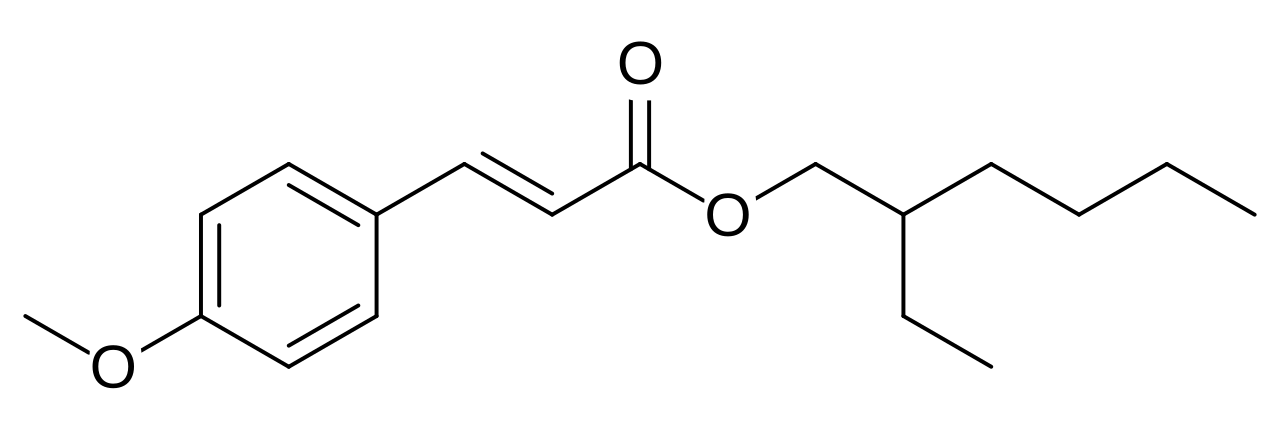
Structural formula of octinoxate (ethylhexyl methoxycinnamate).
Credit: Ed (Edgar181) / Wikimedia Commons

License: Public domain
Wikimedia-provided scaled PNG/JPEG rendering; no content edits
What it is
Octinoxate (CAS 5466-77-3), also called ethylhexyl methoxycinnamate or octyl methoxycinnamate, is an ester of methoxycinnamic acid. [1,2]
What it does and why it is used
It protects against ultraviolet light and is used as an active ingredient in sunscreens to prevent sunburn. [1,3]
Regulatory status and health context
Canada
The sources used here do not cover Canadian rules for octinoxate.
United States
Octinoxate remains on the market while FDA gathers data. In June 2026, FDA added bemotrizinol as a new sunscreen ingredient; zinc oxide and titanium dioxide remain the only filters proposed as generally recognized as safe and effective under the 2021 proposed order. [1] Hawaii bans non-prescription sale of sunscreens containing octinoxate. [3]
European Union
The sources used here do not cover EU rules for octinoxate.
Environmental notes
Hawaii's legislature found that octinoxate and oxybenzone harm marine ecosystems and coral reefs, including increased coral bleaching, and reported elevated levels at popular bays. [4]
Quick facts
- CAS: 5466-77-3. [1]
- Use: ultraviolet filter in sunscreens. [1,3]
- Absorption: above FDA's 0.5 ng/mL threshold after one day. [2]
- FDA: more data needed; not a finding that it is unsafe. [1]
- Hawaii: sale without prescription banned since 2021. [3]
Sources
Sources were accessed on 2026-11-21. Source publication dates differ from this draft's review date. Image licences are listed with each image.
- FDA: Questions and answers: FDA posts deemed final order and proposed order for over-the-counter sunscreen.
- Matta MK et al. Effect of sunscreen application on plasma concentration of sunscreen active ingredients: a randomized clinical trial. JAMA, 2020 (PubMed).
- Hawaii Revised Statutes §342D-21: Sunscreen; sale and distribution; prohibited.
- Hawaii State Legislature: Act 104, Session Laws of Hawaii 2018 (PDF).
- FDA: Sunscreen: how to help protect your skin from the sun.