
Nutrients and supplementsFood and drink
Potassium: the heart and muscle mineral in fruit and vegetables
CAS 7440-09-7.Also known as dietary potassium and electrolyte.
Editorial draft Last reviewed 15 November 2026 About 533 words
CC INDEX
How it works28/100 Mild
Too much or too little potassium in the blood can cause dangerous heart rhythms, mostly linked to kidney problems or certain medicines. It is an essential mineral found in many foods, so the score sits in the mild band.
An editorial summary of this article’s cited evidence. It isn’t medical advice or a personal risk estimate.
Age index
What is the age index?Which age groups are more affected by this chemical’s possible health issues, based on this article’s sources.
- Pregnancy Unborn babies Lower concern
- Infants 0 to 1 Lower concern
- Young children 1 to 5 Lower concern
- Children 6 to 12 Lower concern
- Teens 13 to 19 Lower concern
- Adults 20 to 64 Lower concern
- Older adults 65 and over Lower concern
- MedlinePlus lists daily intake recommendations that vary by age and sex, and notes that people with kidney problems may need a potassium-restricted diet.

Illustration of potassium-rich foods.
Credit: Chemical Century; AI-generated illustration
License: CC0 1.0
Illustration, not a photograph of a specific product. Resized and cropped for the web.
Potassium is a mineral and electrolyte the body needs for heart health, muscles, bones and acid-base balance. Vegetables and fruit are the richest sources, including beans, lentils, potatoes, tomatoes, bananas and dried apricots. Having too much or too little can cause serious health problems, especially heart rhythm problems. People with kidney problems may need to limit potassium-rich foods.
Everyday exposure: where you meet it and how much
Vegetables and fruit are the richest sources of potassium, including beans, lentils, tomatoes, potatoes (particularly with the skin), sweet potatoes, soy, winter squash, citrus fruits, cantaloupe, bananas, kiwi, prunes and apricots. [1] Milk, yogurt, nuts, meats and fish also provide some. [1]
Known and suspected harms
Evidence labels are editorial summaries, not individual risk predictions: established means recognized under the stated conditions; probable means a likely contribution with uncertainty; possible means limited evidence; disputed means assessors disagree. These labels do not describe how common an effect is.
- Established — too much (hyperkalemia): it may cause abnormal and dangerous heart rhythms; common causes include poor kidney function, ACE inhibitors and angiotensin II receptor blockers, potassium-sparing diuretics such as spironolactone, triamterene or amiloride, and severe infection. [1]
- Established — too little (hypokalemia): it can cause weak muscles, abnormal heart rhythms and a slight rise in blood pressure; causes include diuretics, too many laxatives, severe or prolonged vomiting or diarrhea, and some kidney or adrenal disorders. [1]
Reducing avoidable exposure and harm
People with kidney problems, particularly those on dialysis, should not eat too many potassium-rich foods, and a health care provider will recommend a potassium-restricted diet if needed. [1] Recommended adult intakes are 2600 mg/day for women and 3400 mg/day for men age 19 and older. [1]
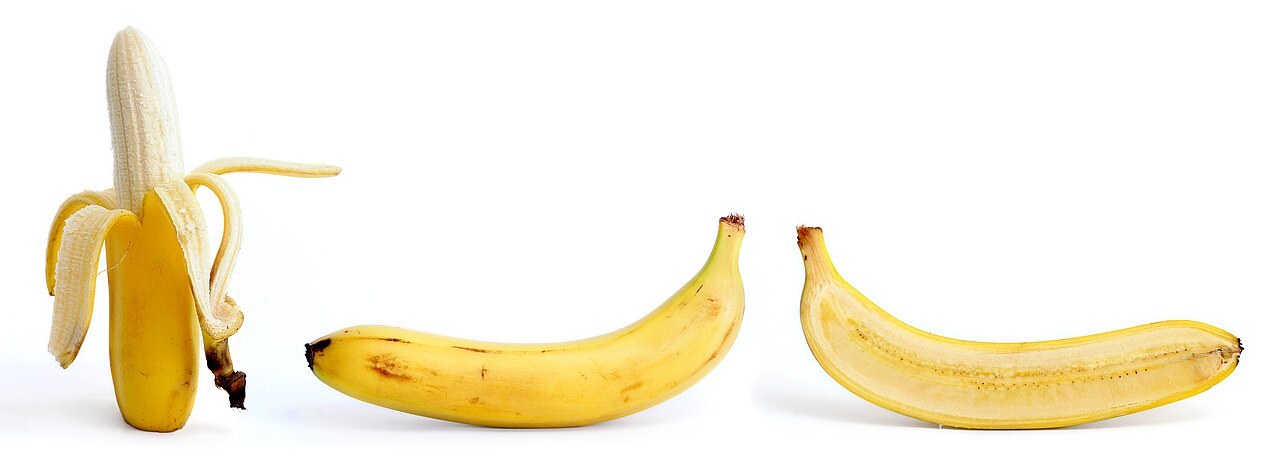
Bananas, a source of potassium.
Credit: fir0002 (flagstaffotos) / Wikimedia Commons

License: GFDL 1.2
Resized for the web; no content edits
What it is
Potassium (CAS 7440-09-7 for the element) is a mineral and a type of electrolyte. [1,2]
What it does and why it is used
It supports heart health, muscle function and bone health, controls acid-base balance and helps the body use carbohydrates. [1]
Regulatory status and health context
Canada
The sources used for this review do not summarize Canadian rules for potassium, so we do not describe them here.
United States
The sources used for this review do not summarize US rules for potassium, so we do not describe them here.
European Union
The EU law website was not fully available when this article was reviewed, so EU legal status was not checked and is not summarized here.
Environmental notes
The sources used for this review do not assess potassium's environmental effects, so we do not summarize them here.
Quick facts
- CAS: 7440-09-7 (element). [2]
- Where: vegetables, fruit, beans, potatoes, dairy. [1]
- Main concern: blood levels too high or too low. [1]
- Most at risk: people with kidney problems. [1]
Sources
All URLs were fetched on 2026-11-15. The EU law website was not fully available that day, so EU legislation could not be checked for this review. Source publication dates differ from this draft's review date. The CAS number shown is for elemental potassium; in food, potassium is present as dissolved salts.