
Food and drinkSkin and personal careMedicines and health
Propylene glycol: the moisture-holding liquid in foods, medicines and vape liquids
CAS 57-55-6.Also known as 1,2-propanediol, PG, and methyl glycol.
Editorial draft Last reviewed 15 November 2026 About 765 words
CC INDEX
How it works40/100 Mild
Propylene glycol is generally recognized as safe in food and causes only occasional irritation, so severity is low. It is in many foods, medicines and cosmetics, so exposure is very common, and vaping adds an inhaled route with unknown long-term risks. Food use is limited by category in the US, so the score sits in the mild band.
An editorial summary of this article’s cited evidence. It isn’t medical advice or a personal risk estimate.
Age index
What is the age index?Which age groups are more affected by this chemical’s possible health issues, based on this article’s sources.
- Pregnancy Unborn babies Not well studied
- Infants 0 to 1 Not well studied
- Young children 1 to 5 Not well studied
- Children 6 to 12 Not well studied
- Teens 13 to 19 Moderate
- Adults 20 to 64 Lower concern
- Older adults 65 and over Lower concern
- Food and cosmetic uses are generally considered safe. Teens are rated moderate because of vaping, where heated propylene glycol forms carbonyl compounds and long-term risks are unknown.

Illustration of everyday products. Propylene glycol is used in some medicines, cosmetics and vaping liquids.
Credit: Chemical Century; AI-generated illustration
License: CC0 1.0
Illustration, not a photograph of a specific product. Resized and cropped for the web.
Propylene glycol is a clear, slightly syrupy liquid that helps foods, medicines and cosmetics stay moist and carries flavours and colours. It is generally regarded as safe in these uses, and the body breaks it down quickly. It also makes up much of the liquid in many vaping products and stage fog, and heating it is a different question: it can form irritating chemicals, and the long-term effects of breathing it in are still being studied. For most people, the everyday food and cosmetic uses are not a worry.
Everyday exposure: where you meet it and how much
Propylene glycol is used to absorb water and keep moisture in some medicines, cosmetics and food products, and as a solvent for food colours and flavours. [1] If you eat foods, use cosmetics or take medicines that contain it, you will be exposed, but ATSDR says these amounts are not generally considered harmful. [1] It is also used to make artificial smoke and mist for theatre, concerts and fire-safety training, often in enclosed spaces where exposure may be higher. [1]
Health Canada lists propylene glycol as one of the main ingredients of vaping liquids. [3]
Known and suspected harms
Evidence labels are editorial summaries, not individual risk predictions: established means recognized under the stated conditions; probable means a likely contribution with uncertainty; possible means limited evidence; disputed means assessors disagree. These labels do not describe how common an effect is.
- Established — skin irritation: frequent skin exposure can sometimes irritate the skin, and repeated eye, skin, nasal or oral exposure for a short time may cause some irritation. [1]
- Established — breakdown products when heated: at high temperatures, propylene glycol and glycerol break apart to form carbonyl compounds such as formaldehyde, acrolein and acetaldehyde, and higher power settings on vaping devices can produce more of them. [3]
- Possible — effects of long-term inhalation: Health Canada says that while propylene glycol is considered safe in cosmetics and food, the long-term risks of inhaling it are unknown and still being researched. [3]
- Established — quickly cleared: the body breaks down propylene glycol in about 48 hours, and unlike ethylene glycol it does not form harmful crystals as it breaks down. [1]
Reducing avoidable exposure and harm
Food, medicine and cosmetic uses do not call for special precautions in the sources reviewed. [1] If a product irritates your skin, stop using it. If you do not vape, there is no reason to start; Health Canada notes that higher power and temperature settings on vaping devices produce more potentially harmful chemicals. [3]
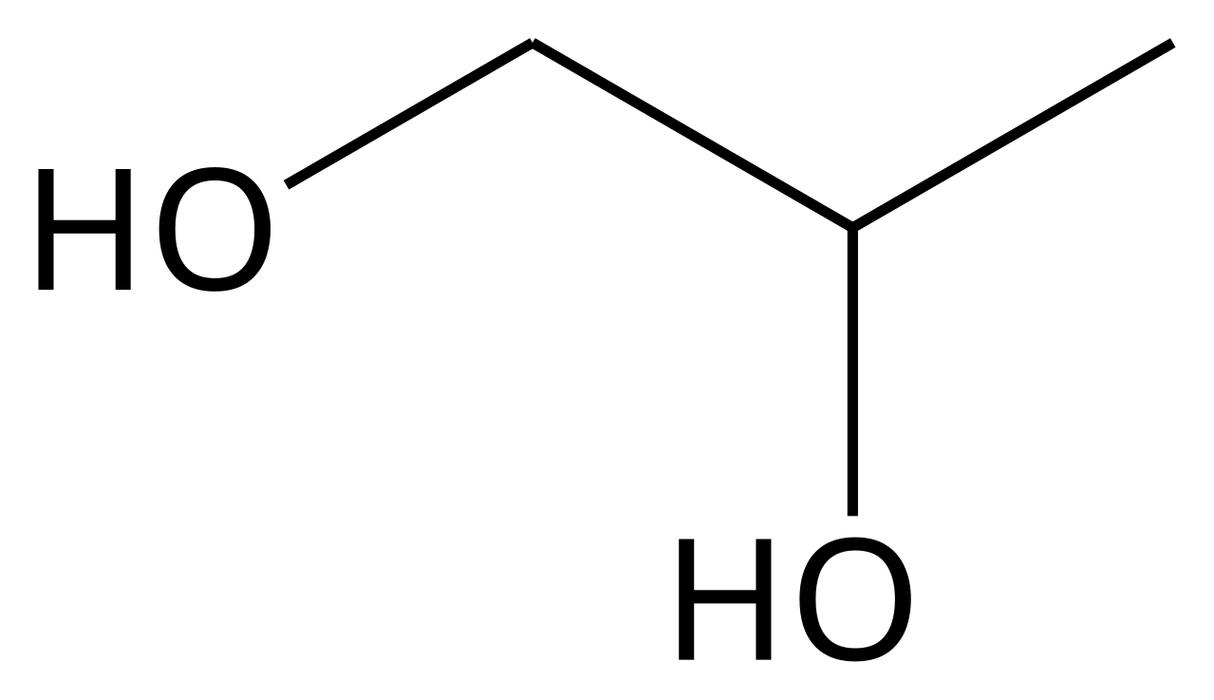
Structural formula of propylene glycol.
Credit: 0dorkmann / Wikimedia Commons

License: CC0 1.0
Rendered from SVG to PNG, whitespace trimmed and placed on white
What it is
Propylene glycol (CAS 57-55-6), also known as 1,2-propanediol, is a clear, colourless, slightly syrupy liquid that absorbs water. [1,2]
What it does and why it is used
It holds moisture, dissolves colours and flavours, and is used in polyester manufacture, de-icing fluids and food-safe antifreeze. [1] In US food it serves many technical roles, from humectant and solvent to emulsifier and thickener. [2]
Regulatory status and health context
Canada
Health Canada describes propylene glycol as a main vaping-liquid ingredient and explains its heated breakdown products. [3] The sources used for this review do not summarize Canadian food or cosmetic rules for it.
United States
FDA lists propylene glycol as generally recognized as safe in food, with maximum levels such as 2% in most food categories, 5% in alcoholic beverages and 24% in confections and frostings. [2] ATSDR notes that FDA considers it acceptable in flavourings, drugs and cosmetics. [1]
European Union
The EU law website was not fully available when this article was reviewed, so EU legal status was not checked and is not summarized here.
Environmental notes
ATSDR notes that propylene glycol mixes completely with water and breaks down relatively quickly, within several days to a week, in surface water and soil. [1]
Quick facts
- CAS: 57-55-6. [2,4]
- Where: foods, medicines, cosmetics, stage fog and vaping liquids. [1,3]
- Main concern: heated breakdown products when vaped. [3]
- Most at risk: people who vape; people with sensitive skin. [1,3]
Sources
All URLs were fetched on 2026-11-15; Health Canada pages were read with a separate web-reading tool because they did not respond to this review's direct requests. The EU law website was not fully available that day, so EU legislation could not be checked. Source publication dates differ from this draft's review date.