
Food and drinkCleaning and laundry
Starch: kitchen starch versus laundry starch, and why the difference matters
Also known as cornstarch, laundry starch, and potato starch.
Editorial draft Last reviewed 15 November 2026 About 533 words
CC INDEX
How it works24/100 Mild
Cooking starch is generally not harmful, while laundry starch swallowed over a long time can cause more serious effects. Starch is very common at home, so the score sits in the mild band.
An editorial summary of this article’s cited evidence. It isn’t medical advice or a personal risk estimate.
Age index
What is the age index?Which age groups are more affected by this chemical’s possible health issues, based on this article’s sources.
- Pregnancy Unborn babies Lower concern
- Infants 0 to 1 Lower concern
- Young children 1 to 5 Lower concern
- Children 6 to 12 Lower concern
- Teens 13 to 19 Lower concern
- Adults 20 to 64 Lower concern
- Older adults 65 and over Lower concern
- The sources used for this review do not give age-specific advice.

Illustration of starch and ironing. Laundry starch is used to add firmness to clothing.
Credit: Chemical Century; AI-generated illustration
License: CC0 1.0
Illustration, not a photograph of a specific product. Resized and cropped for the web.
Starch is made from plants such as corn, potatoes, rice and wheat, and it is used in cooking, cosmetics and laundry products that stiffen clothing. Cooking starch is generally not harmful, and recovery after swallowing it is likely. Laundry starch is a different product, and some older laundry starches may contain borax or other additives. Poisoning from laundry starch is more serious, especially after swallowing it over a long time.
Everyday exposure: where you meet it and how much
Cooking and laundry starch are both made from vegetable products, most commonly corn, potatoes, rice and wheat. [1] Starch is found in cooking starch, cosmetic products and laundry products, and cooking and laundry starch are different substances. [1] Some older laundry starches may contain borax, magnesium salts or polishing agents. [1]
Known and suspected harms
Evidence labels are editorial summaries, not individual risk predictions: established means recognized under the stated conditions; probable means a likely contribution with uncertainty; possible means limited evidence; disputed means assessors disagree. These labels do not describe how common an effect is.
- Possible — cooking starch: swallowing it can cause a blockage in the intestines and stomach pain. [1]
- Established — long-term laundry starch: swallowing it over a very long time can cause decreased or no urine, yellow eyes or skin, collapse, fever, low blood pressure, blisters, bluish or flaking skin, diarrhea, vomiting, coma, seizures, drowsiness and twitching. [1]
- Established — breathing or eyes: inhaled starch may cause wheezing, rapid or shallow breathing and chest pain, and starch in the eyes may cause redness, tearing and burning. [1]
Reducing avoidable exposure and harm
Seek medical help and do not make the person throw up unless poison control or a health care provider says to. [1] If starch is on the skin or in the eyes, flush with lots of water for at least 15 minutes. [1]
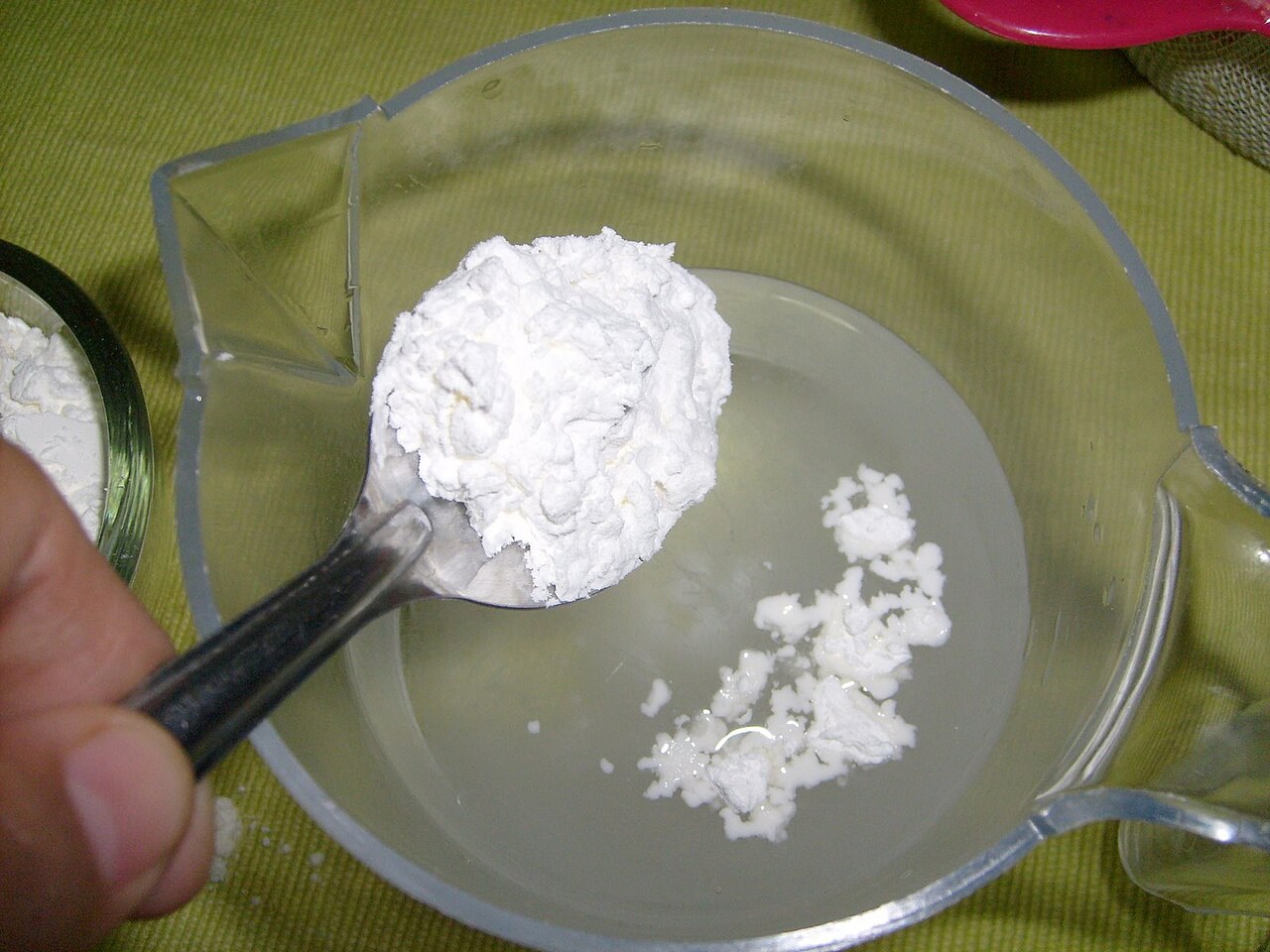
Cornstarch being mixed with water.
Credit: kalaya (Picasa) / Wikimedia Commons

License: CC BY-SA 3.0
Resized for the web; no content edits
What it is
Starch is a substance made from plants such as corn, potatoes, rice and wheat. [1]
What it does and why it is used
It thickens food and adds firmness and shape to clothing. [1]
Regulatory status and health context
Canada
The sources used for this review do not summarize Canadian rules for starch, so we do not describe them here.
United States
The sources used for this review do not summarize US rules for starch, so we do not describe them here.
European Union
The EU law website was not fully available when this article was reviewed, so EU legal status was not checked and is not summarized here.
Environmental notes
The sources used for this review do not assess starch's environmental effects, so we do not summarize them here.
Quick facts
- CAS: no single CAS number verified. [1]
- Where: cooking, cosmetics, laundry products. [1]
- Main concern: low for cooking starch; higher for laundry starch. [1]
- Outlook: recovery likely with cooking starch. [1]
Sources
All URLs were fetched on 2026-11-15. The EU law website was not fully available that day, so EU legislation could not be checked for this review. Source publication dates differ from this draft's review date.