
Sulfur dioxide: the sharp-smelling gas from burning coal and oil
CAS 7446-09-5.Also known as SO2, sulphur dioxide, and sulfur oxides.
Editorial draft Last reviewed 15 November 2026 About 723 words
CC INDEX
How it works58/100 Moderate
Short-term exposure harms the airways, especially in people with asthma, and very high levels can be life-threatening. Everyday outdoor exposure is usually low, with more near industrial sources. Outdoor air standards apply, so the score sits in the moderate band.
An editorial summary of this article’s cited evidence. It isn’t medical advice or a personal risk estimate.
Age index
What is the age index?Which age groups are more affected by this chemical’s possible health issues, based on this article’s sources.
- Pregnancy Unborn babies Not well studied
- Infants 0 to 1 Moderate
- Young children 1 to 5 Higher concern
- Children 6 to 12 Higher concern
- Teens 13 to 19 Moderate
- Adults 20 to 64 Moderate
- Older adults 65 and over Moderate
- Young children (higher concern): Children with asthma are especially sensitive to sulfur dioxide
- Children (higher concern): Children with asthma are especially sensitive to sulfur dioxide
- EPA says people with asthma, particularly children, are sensitive to sulfur dioxide. ATSDR notes that children with the highest exposures are those living near industrial sources.

Illustration of an industrial plant near homes. Burning coal and oil and smelting metal ore are major sources of sulfur dioxide.
Credit: Chemical Century; AI-generated illustration
License: CC0 1.0
Illustration, not a photograph of a specific product. Resized and cropped for the web.
Sulfur dioxide is the sharp, choking smell you might notice near a smelter, a coal-burning plant or a ship's exhaust. Most of it comes from burning fossil fuels that contain sulfur, and in everyday outdoor air the levels are usually low. Short bursts of higher levels can make breathing harder, and people with asthma, especially children, tend to feel it first. Air quality alerts help you know when to take it easy outdoors.
Everyday exposure: where you meet it and how much
The largest source of sulfur dioxide in the air is burning fossil fuels at power plants and other industrial facilities. [1] Smaller sources include extracting metal from ore, volcanoes, and locomotives, ships and heavy equipment that burn high-sulfur fuel. [1]
People are exposed mainly by breathing air that contains it. [2] Workers in copper smelting, coal or oil processing and the manufacture of sulfuric acid, paper, food preservatives and fertilizers can have higher exposures, and children living near such industries have the highest exposures among children. [2]
Known and suspected harms
Evidence labels are editorial summaries, not individual risk predictions: established means recognized under the stated conditions; probable means a likely contribution with uncertainty; possible means limited evidence; disputed means assessors disagree. These labels do not describe how common an effect is.
- Established — breathing problems: short-term exposure can harm the respiratory system and make breathing difficult. [1]
- Established — asthma: people with asthma, particularly children, are sensitive to sulfur dioxide, and exercising people with asthma react to low concentrations. [1,2]
- Established — very high exposure: short-term exposure to high levels can be life-threatening; miners exposed after an explosion developed burning of the nose and throat, breathing difficulties and severe airway obstruction. [2]
- Established — particle pollution: sulfur oxides react in the air to form small particles that can penetrate deep into the lungs. [1]
Reducing avoidable exposure and harm
Because exposure is mostly through the air, limit outdoor activity during times of high air pollution, and follow news bulletins and air pollution advisories. [2]
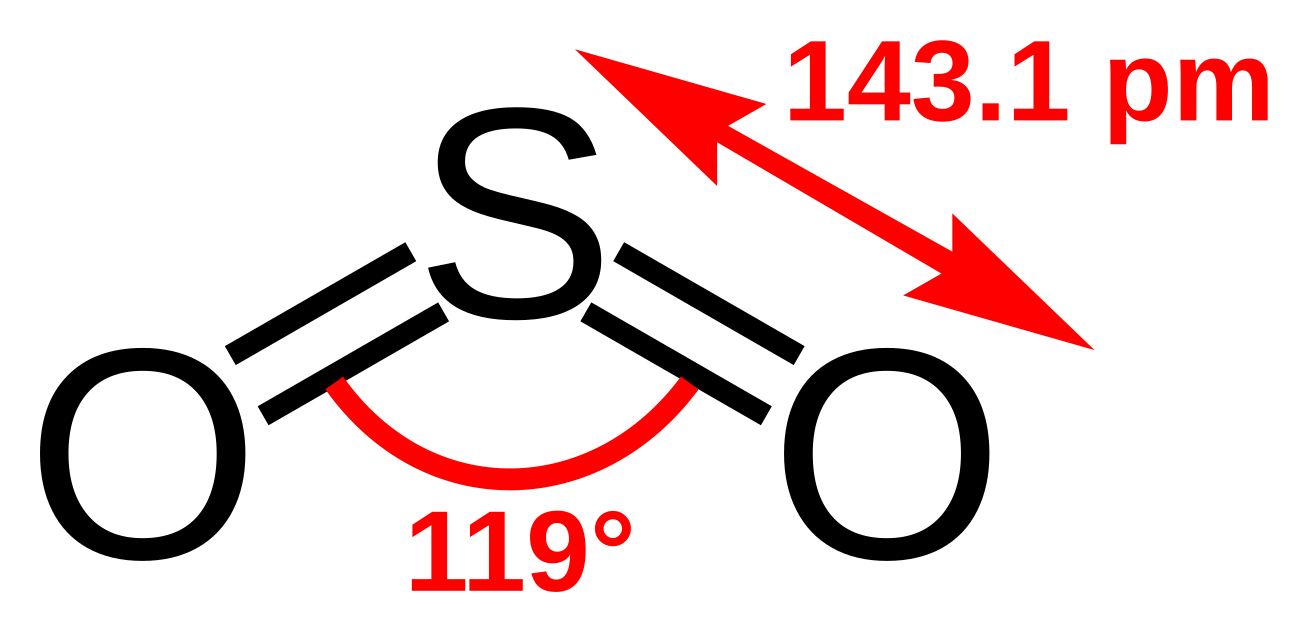
Structural formula of sulfur dioxide (SO2).
Credit: Richtom80 / Wikimedia Commons

License: Public domain
Rendered from SVG to PNG, whitespace trimmed and placed on white
What it is
Sulfur dioxide (CAS 7446-09-5) is a colourless gas with a pungent odour that dissolves easily in water and does not burn. [2,5] It is the main indicator for the group of gases called sulfur oxides. [1]
What it does and why it is used
In the air it is mainly a combustion by-product. [1] ATSDR notes it is also involved in making sulfuric acid, paper, food preservatives and fertilizers. [2]
Regulatory status and health context
Canada
This review did not check Canadian sulfur dioxide standards, so they are not summarized here.
United States
EPA's primary national outdoor standard for sulfur dioxide is 75 ppb over 1 hour. [3] ATSDR notes a US workplace limit of 5 ppm averaged over an 8-hour shift. [2]
European Union
The EU air quality directive, as originally published in 2008, set limit values for sulfur dioxide of 350 µg/m³ over 1 hour, not to be exceeded more than 24 times a year, and 125 µg/m³ over 1 day, not to be exceeded more than 3 times a year. [4] Later changes were not checked for this review.
Environmental notes
At high concentrations sulfur oxides can damage foliage and slow plant growth, and they contribute to acid rain and to haze that reduces visibility; deposited particles can also stain and damage stone. [1]
Quick facts
- CAS: 7446-09-5. [5]
- Where: emissions from burning coal and oil, smelters and some vehicles and ships. [1]
- Main danger: breathing difficulty, especially with asthma. [1]
- Most at risk: people with asthma, especially children, and people near industrial sources. [1,2]
Sources
All URLs were fetched on 2026-11-15, except the EU air quality directive: the EU law website was not fully available that day, so it was read from a copy fetched for earlier Chemical Century articles in November 2026. That copy is the directive as originally published in 2008, and later amendments or replacements were not checked. Source publication dates differ from this draft's review date.