
Plastics & packagingWater, air and residues
Vinyl chloride: the gas used to make PVC plastic is a known human carcinogen
CAS 75-01-4.Also known as chloroethene, vinyl chloride monomer, and VCM.
Editorial draft Last reviewed 14 November 2026 About 908 words
CC INDEX
How it works60/100 Moderate
Vinyl chloride is classified as a known human carcinogen, and highly exposed workers developed a rare liver cancer and other harms. Levels in the general environment are lower than those known to cause health problems, so everyday exposure scores very low. It is limited in US drinking water and prohibited in Canadian and EU cosmetics, so the score sits in the moderate band.
An editorial summary of this article’s cited evidence. It isn’t medical advice or a personal risk estimate.
Age index
What is the age index?Which age groups are more affected by this chemical’s possible health issues, based on this article’s sources.
- Pregnancy Unborn babies Not well studied
- Infants 0 to 1 Not well studied
- Young children 1 to 5 Not well studied
- Children 6 to 12 Not well studied
- Teens 13 to 19 Not well studied
- Adults 20 to 64 Moderate
- Older adults 65 and over Not well studied
- The clearest harms come from high workplace exposure; animal studies suggest exposure during pregnancy can affect fetal growth and development, but human data by age are limited.

Illustration of PVC pipes and cable. Vinyl chloride is used to make PVC; the finished plastic is not a known carcinogen.
Credit: Chemical Century; AI-generated illustration
License: CC0 1.0
Illustration, not a photograph of a specific product. Resized and cropped for the web.
Vinyl chloride is the building block of PVC, the plastic in many water pipes, cable coatings and packaging, though the finished plastic is not itself considered a cancer risk. Most people meet only tiny amounts of the gas itself, from tobacco smoke, from air near plastics plants or waste sites, or occasionally from contaminated water or ground beneath a home. At those everyday levels, health agencies say problems are not expected. The serious harms, including a rare liver cancer, have been seen mainly in workers who breathed high levels for years, which is why it is tightly limited in drinking water and banned from cosmetics.
Everyday exposure: where you meet it and how much
Vinyl chloride is a colourless gas with a mild, sweet odour that does not occur naturally; it is used to make polyvinyl chloride (PVC), the plastic in pipes, wire and cable coatings and packaging. [1,2] It can also form when solvents such as trichloroethylene and tetrachloroethylene break down. [1]
People can breathe it in air released from plastics factories, hazardous waste sites and landfills, and from cigarette and cigar smoke. [1] Very low levels can be in drinking water, though most people are not expected to be exposed that way; if a water supply is contaminated, it can enter household air during showering, cooking or laundry. [1,2] Its vapour can also get into indoor air in buildings on contaminated ground, and workers can be exposed by breathing it or through skin and eye contact. [1]
Known and suspected harms
Evidence labels are editorial summaries, not individual risk predictions: established means recognized under the stated conditions; probable means a likely contribution with uncertainty; possible means limited evidence; disputed means assessors disagree. These labels do not describe how common an effect is.
- Established — cancer in highly exposed workers: highly exposed workers have developed angiosarcoma of the liver, a rare cancer. [1] NCI notes that exposure is associated with that cancer as well as primary liver cancer, brain and lung cancers, lymphoma and leukemia. [2] US health agencies, EPA and the International Agency for Research on Cancer classify vinyl chloride as a human carcinogen. [1]
- Established — effects of breathing high levels: breathing high levels can cause dizziness or sleepiness, very high levels can cause loss of consciousness, and extremely high levels can cause death. [1]
- Established — other effects in workers: some people who breathed it for years had changes in liver structure; some workers had nerve damage and changes in immunity, and some with very high exposure had poor blood flow in the hands, with fingers that turned white and hurt in the cold. [1]
- Possible — effects during pregnancy: animal studies have shown that exposure during pregnancy can affect the growth and development of the fetus. [1]
Reducing avoidable exposure and harm
The levels typically found in the environment are lower than those known to cause health problems. [1] Because tobacco smoke contains low levels of vinyl chloride, limiting a family's exposure to cigarette and cigar smoke may help reduce exposure. [1] People on private wells near industrial or waste sites can ask local health authorities about testing, since contaminated water can release vinyl chloride into indoor air. [2] NCI points to workplace exposure limits set by the US Occupational Safety and Health Administration for workers. [2]
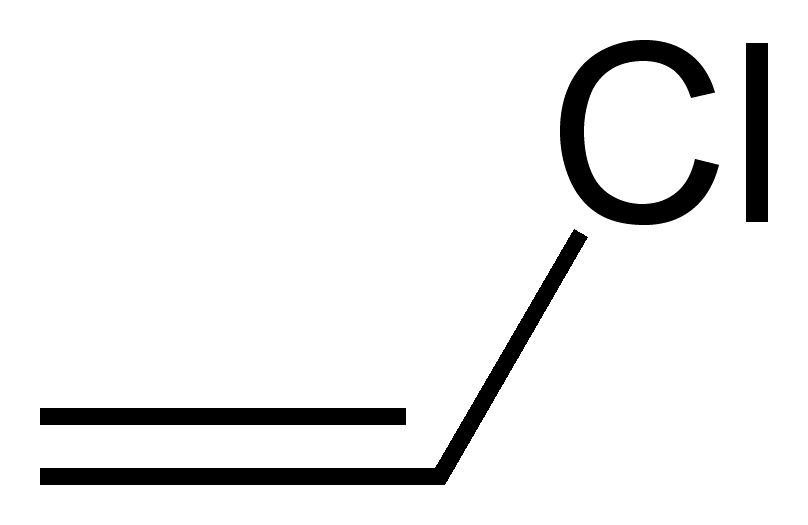
Skeletal structure of vinyl chloride.
Credit: Benjah-bmm27 / Wikimedia Commons

License: Public domain
Whitespace trimmed and placed on white
What it is
Vinyl chloride (CAS 75-01-4) is a manufactured, flammable gas that evaporates easily and is unstable at high temperatures. [1,6] PVC made from it is not a known or suspected carcinogen. [2]
What it does and why it is used
Nearly all of its use is as the raw material for PVC plastic. [1,2]
Regulatory status and health context
Canada
Health Canada's Cosmetic Ingredient Hotlist lists vinyl chloride monomer as prohibited in cosmetics. [4]
United States
EPA's drinking water standard for vinyl chloride is 0.002 milligrams per litre, with a health goal of zero; EPA lists leaching from PVC pipes and discharge from plastics factories as sources in drinking water, and increased cancer risk as the long-term concern above the limit. [3]
European Union
The EU cosmetics regulation lists vinyl chloride monomer among the substances prohibited in cosmetic products. [5]
Environmental notes
Liquid vinyl chloride evaporates easily, and vinyl chloride near the surface of water or soil evaporates quickly; in air it breaks down within a few days into other substances, some of which can be harmful. [1] It is unlikely to build up in plants or animals people eat. [1]
Quick facts
- CAS: 75-01-4. [6]
- Where: plastics factories, waste sites, tobacco smoke; rarely contaminated water or soil vapour. [1,2]
- Main danger: cancer, including a rare liver cancer, after high long-term exposure. [1,2]
- Most at risk: workers exposed to high levels. [1]
Sources
All URLs were fetched on 2026-11-14, except the Health Canada Hotlist and the EU cosmetics regulation, which did not respond to this review's requests; those were read from copies fetched for earlier Chemical Century articles in November 2026. The EU text is the regulation as originally published, and later amendments were not checked. Source publication dates differ from this draft's review date.
- ATSDR: Vinyl chloride fact sheet.
- National Cancer Institute: Vinyl chloride.
- US EPA: National primary drinking water regulations.
- Health Canada: Cosmetic Ingredient Hotlist, prohibited and restricted ingredients.
- EUR-Lex: Regulation (EC) No 1223/2009 on cosmetic products, as originally published.
- PubChem PUG REST: vinyl chloride synonyms.