
Vitamin C: an essential nutrient that is very safe in food, with limits on high-dose supplements
CAS 50-81-7.Also known as ascorbic acid and L-ascorbic acid.
Editorial draft Last reviewed 14 November 2026 About 792 words
CC INDEX
How it works27/100 Mild
Serious harm from too much vitamin C is very rare, and high doses mainly cause stomach upset and diarrhea, with kidney stones a rare possibility. Almost everyone takes it in through food and many people take supplements, so exposure scores higher than harm. FDA treats ascorbic acid as generally recognized as safe, so the score sits in the mild band.
An editorial summary of this article’s cited evidence. It isn’t medical advice or a personal risk estimate.
Age index
What is the age index?Which age groups are more affected by this chemical’s possible health issues, based on this article’s sources.
- Pregnancy Unborn babies Moderate
- Infants 0 to 1 Not well studied
- Young children 1 to 5 Not well studied
- Children 6 to 12 Not well studied
- Teens 13 to 19 Not well studied
- Adults 20 to 64 Lower concern
- Older adults 65 and over Moderate
- Pregnancy is flagged because large supplement doses are not recommended; older malnourished adults are flagged for deficiency (scurvy), not excess.

Illustration of foods rich in vitamin C. Fresh, uncooked fruits and vegetables are the best food sources.
Credit: Chemical Century; AI-generated illustration
License: CC0 1.0
Illustration, not a photograph of a specific product. Resized and cropped for the web.
Vitamin C comes to most of us through oranges, strawberries, peppers, broccoli and potatoes, and the body needs a steady supply because it cannot make or store much of it. Serious harm from too much is very rare, since extra amounts leave in the urine, but very high supplement doses can upset the stomach, cause diarrhea and, rarely, contribute to kidney stones. Many people take it hoping to fend off colds; research suggests regular use may make colds slightly shorter for some people, but starting once a cold has begun does not seem to help. Eating plenty of fresh fruit and vegetables usually covers what the body needs.
Everyday exposure: where you meet it and how much
All fruits and vegetables contain some vitamin C; the richest include citrus fruits and juices, cantaloupe, kiwi, mango, papaya, pineapple, berries and watermelon, and vegetables such as broccoli, Brussels sprouts, peppers, leafy greens, potatoes, tomatoes and winter squash. [1] Some cereals and drinks are fortified with it, and it is widely sold as a supplement. [1]
The best sources are uncooked or raw fruits and vegetables: cooking, long storage, microwaving, steaming and light can all reduce vitamin C, which is why juice in a carton keeps it better than juice in a clear bottle. [1] Recommended intakes are 75 milligrams a day for adult women and 90 milligrams for adult men, with smaller amounts for children. [1]
Known and suspected harms
Evidence labels are editorial summaries, not individual risk predictions: established means recognized under the stated conditions; probable means a likely contribution with uncertainty; possible means limited evidence; disputed means assessors disagree. These labels do not describe how common an effect is.
- Established — stomach upset and diarrhea at high doses: serious side effects from too much vitamin C are very rare because the body cannot store it, but amounts greater than 2,000 milligrams a day are not recommended because they can lead to stomach upset and diarrhea. [1]
- Possible — kidney stones: very high doses can, rarely, lead to kidney stones. [1]
- Probable — effects on the baby after high doses in pregnancy: large vitamin C supplement doses are not recommended during pregnancy, because they can lead to a shortage of vitamin C in the baby after delivery. [1]
- Established — harm from too little: deficiency can cause anemia, bleeding gums, easy bruising, nosebleeds, slow wound healing and weaker resistance to infection; its severe form, scurvy, mainly affects older, malnourished adults. [1]
Reducing avoidable exposure and harm
Eating a variety of fruits and vegetables, some of them raw, is the simplest way to get enough. [1] If you take supplements, staying below 2,000 milligrams a day avoids the doses linked to stomach problems, and people who are pregnant should not take large doses. [1] For colds, research shows that vitamin C supplements or foods do not reduce the risk of catching one for most people; people who take supplements regularly might have slightly shorter colds or milder symptoms, but taking vitamin C after a cold starts does not appear to help. [1]
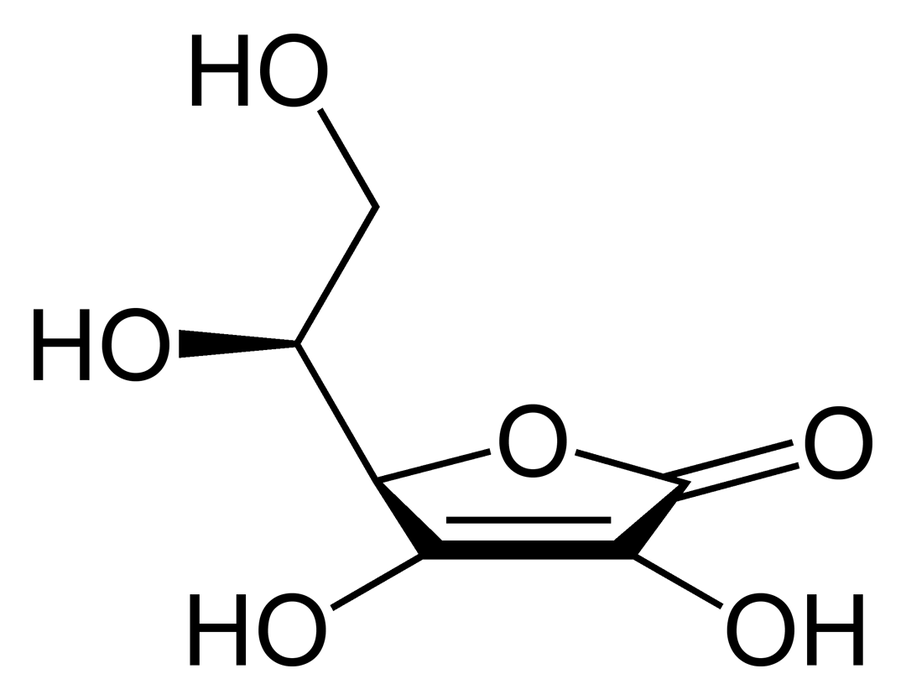
Skeletal structure of ascorbic acid (vitamin C).
Credit: Benjah-bmm27 / Wikimedia Commons

License: Public domain
Whitespace trimmed and placed on white
What it is
Vitamin C (ascorbic acid, CAS 50-81-7) is a water-soluble vitamin; the body cannot make it or store it, and leftover amounts leave the body in urine, so it has to be eaten regularly. [1,3]
What it does and why it is used
The body uses vitamin C to form collagen for skin, tendons, ligaments and blood vessels, to heal wounds, to maintain cartilage, bones and teeth, and to help absorb iron; it is also an antioxidant. [1] Ascorbic acid is added to some foods and drinks. [1,2]
Regulatory status and health context
Canada
The sources used for this review do not cover vitamin C's status in Canada, so we do not summarize it here.
United States
FDA lists ascorbic acid as generally recognized as safe when used in food in accordance with good manufacturing practice. [2]
European Union
The sources used for this review do not cover vitamin C's status in the European Union, so we do not summarize it here.
Environmental notes
The sources used for this review do not assess environmental effects of vitamin C, so we do not summarize them here.
Quick facts
- CAS: 50-81-7 (ascorbic acid). [3]
- Where: fruits and vegetables, fortified foods and drinks, supplements. [1]
- Main danger: stomach upset and diarrhea from very high supplement doses; rarely kidney stones. [1]
- Most at risk: pregnant people taking large doses; older malnourished adults for deficiency. [1]
Sources
All URLs were fetched on 2026-11-14. Source publication dates differ from this draft's review date.