
Vitamin E: the antioxidant vitamin in nuts and oils, and why high-dose pills need care
CAS 59-02-9.Also known as alpha-tocopherol, d-alpha-tocopherol, and dl-alpha-tocopherol.
Editorial draft Last reviewed 15 November 2026 About 774 words
CC INDEX
How it works38/100 Mild
High-dose vitamin E supplements may raise bleeding risk and one large study linked them to prostate cancer, while vitamin E in food is not harmful. Vitamin E is in many foods and multivitamins, and vitamin E-only supplements often contain much more than recommended amounts. An adult upper limit guides supplement use, so the score sits in the mild band.
An editorial summary of this article’s cited evidence. It isn’t medical advice or a personal risk estimate.
Age index
What is the age index?Which age groups are more affected by this chemical’s possible health issues, based on this article’s sources.
- Pregnancy Unborn babies Moderate
- Infants 0 to 1 Lower concern
- Young children 1 to 5 Lower concern
- Children 6 to 12 Lower concern
- Teens 13 to 19 Lower concern
- Adults 20 to 64 Lower concern
- Older adults 65 and over Lower concern
- Upper limits for children are lower than the adult limit. MedlinePlus says high vitamin E levels may increase the risk of birth defects, although this needs more research, and that low intake may lead to anemia in premature babies.

Illustration of vitamin E foods. Nuts, seeds, vegetable oils and leafy greens provide vitamin E.
Credit: Chemical Century; AI-generated illustration
License: CC0 1.0
Illustration, not a photograph of a specific product. Resized and cropped for the web.
Vitamin E is a nutrient found in nuts, seeds, vegetable oils and leafy greens, and it is also sold as a supplement. Vitamin E from food is not considered harmful and does not need to be limited. High-dose supplements are different, because they may raise the risk of bleeding, including bleeding in the brain. The best trials have generally found that extra vitamin E does not prevent heart disease.
Everyday exposure: where you meet it and how much
Vegetable oils such as wheat germ, sunflower and safflower oil, and nuts and seeds such as almonds and sunflower seeds, are among the best food sources, and green vegetables such as spinach and broccoli provide some. [1] Vitamin E is also added to some breakfast cereals, fruit juices, margarines and spreads. [1] Most once-daily multivitamins provide about 13.5 mg, while vitamin E-only supplements commonly contain 67 mg or more, much higher than recommended amounts. [1] Adults are advised to get 15 mg a day, or 19 mg when breastfeeding. [1]
Known and suspected harms
Evidence labels are editorial summaries, not individual risk predictions: established means recognized under the stated conditions; probable means a likely contribution with uncertainty; possible means limited evidence; disputed means assessors disagree. These labels do not describe how common an effect is.
- Established — bleeding: in supplement form, high doses might increase the risk of bleeding and of serious bleeding in the brain (hemorrhagic stroke), so the adult upper limit for supplements is 1,000 mg a day. [1] Upper limits for children are lower. [1]
- Possible — prostate cancer: in one large study, men who took 400 IU (180 mg) of synthetic vitamin E daily for several years had a higher risk of prostate cancer, and some research suggests harm even below the upper limit. [1]
- Established — medicine interactions: vitamin E can increase bleeding risk in people taking anticoagulant or antiplatelet medicines such as warfarin, and antioxidant supplements could alter the effectiveness of chemotherapy and radiation therapy. [1]
- Possible — pregnancy: MedlinePlus says high levels of vitamin E may increase the risk for birth defects, but this needs more research. [2]
Reducing avoidable exposure and harm
Vitamin E naturally present in food and drinks does not need to be limited, and MedlinePlus says the best way to get it is from food. [1,2] If you take a supplement, check the Supplement Facts label; natural vitamin E is often listed as d-alpha-tocopherol and synthetic as dl-alpha-tocopherol, sometimes in International Units rather than mg. [1] Tell your doctor or pharmacist about supplements if you take blood thinners or are having cancer treatment. [1]
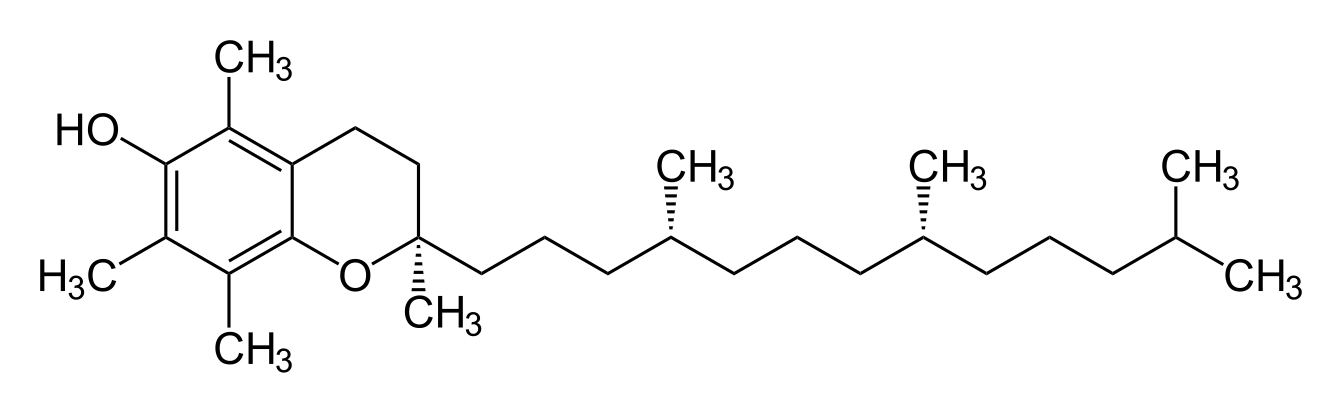
Structural formula of alpha-tocopherol, the main form of vitamin E.
Credit: NEUROtiker / Wikimedia Commons

License: Public domain
Rendered from SVG to PNG, whitespace trimmed and placed on white
What it is
Vitamin E is the name of eight related fat-soluble compounds, including alpha-tocopherol (CAS 59-02-9). [1,4] The body stores vitamin E in fatty tissue and the liver. [2]
What it does and why it is used
In the body it acts as an antioxidant, helps the immune system, and helps widen blood vessels and keep blood from clotting inside them. [1,2]
Regulatory status and health context
Canada
Canada's Food and Drug Regulations say the vitamin E content of a food is determined from d-alpha-tocopherol, dl-alpha-tocopherol and their derivatives, expressed in milligrams. [3] The sources used for this review do not cover Canadian rules for vitamin E supplements.
United States
The NIH Office of Dietary Supplements lists an adult upper limit of 1,000 mg a day for vitamin E supplements, equal to 1,500 IU of the natural form or 1,100 IU of the synthetic form. [1]
European Union
The EU law website was not fully available when this article was reviewed, so EU legal status was not checked and is not summarized here.
Environmental notes
The sources used for this review do not assess vitamin E's environmental effects, so we do not summarize them here.
Quick facts
- CAS: 59-02-9 (alpha-tocopherol). [4]
- Where: nuts, seeds, vegetable oils, supplements. [1]
- Main concern: bleeding risk from high-dose supplements. [1]
- Most at risk: people taking blood thinners or high-dose supplements. [1]
Sources
All URLs were fetched on 2026-11-15; NIH Office of Dietary Supplements pages were read with a separate web-reading tool because they did not respond to this review's direct requests. The EU law website was not fully available that day, so EU legislation could not be checked. Source publication dates differ from this draft's review date.