
Vitamin K: the clotting vitamin in leafy greens, and why steady intake matters with warfarin
CAS 84-80-0.Also known as phylloquinone, phytonadione, menaquinone, vitamin K1, and vitamin K2.
Editorial draft Last reviewed 15 November 2026 About 757 words
CC INDEX
How it works26/100 Mild
Vitamin K has not been shown to cause harm, but changes in intake can interfere with the blood thinner warfarin. Most people get enough from food. Canada sets how it is measured in foods, so the score sits in the mild band.
An editorial summary of this article’s cited evidence. It isn’t medical advice or a personal risk estimate.
Age index
What is the age index?Which age groups are more affected by this chemical’s possible health issues, based on this article’s sources.
- Pregnancy Unborn babies Lower concern
- Infants 0 to 1 Lower concern
- Young children 1 to 5 Lower concern
- Children 6 to 12 Lower concern
- Teens 13 to 19 Lower concern
- Adults 20 to 64 Lower concern
- Older adults 65 and over Lower concern
- Vitamin K itself has not been shown to cause harm at any age. NIH notes that newborns who do not receive a vitamin K injection at birth may have trouble getting enough.

Illustration of leafy greens. Green vegetables are rich sources of vitamin K.
Credit: Chemical Century; AI-generated illustration
License: CC0 1.0
Illustration, not a photograph of a specific product. Resized and cropped for the web.
Vitamin K is a nutrient the body needs to make blood clot, and it is plentiful in leafy greens such as kale and spinach. It has not been shown to cause harm, and most people get enough from food. The main caution is for people taking the blood thinner warfarin, because a sudden change in how much vitamin K they eat can upset how the medicine works. Newborns who do not get a vitamin K injection at birth may not get enough.
Everyday exposure: where you meet it and how much
Vitamin K is found in green leafy vegetables such as spinach, kale, broccoli and lettuce, in vegetable oils, in some fruits such as blueberries and figs, and in meat, cheese, eggs and soybeans. [1] Bacteria in the colon also make some vitamin K that the body can absorb. [1] It is found in multivitamins and in supplements alone or with calcium, magnesium or vitamin D, often as phylloquinone (vitamin K1) or menaquinone-4 and menaquinone-7 (vitamin K2). [1] Recommended amounts for adults are 120 mcg a day for men and 90 mcg for women. [1]
Known and suspected harms
Evidence labels are editorial summaries, not individual risk predictions: established means recognized under the stated conditions; probable means a likely contribution with uncertainty; possible means limited evidence; disputed means assessors disagree. These labels do not describe how common an effect is.
- Established — warfarin interaction: vitamin K can have a serious interaction with warfarin; a sudden change in intake can cause dangerous bleeding if you consume less or blood clots if you consume more. [1] MedlinePlus says people on warfarin may need to eat the same amount of vitamin K-containing foods every day. [2]
- Established — low toxicity: vitamin K has not been shown to cause any harm. [1]
- Established — deficiency and bleeding: severe deficiency can cause bruising and bleeding because blood takes longer to clot; groups at risk include newborns who do not receive a vitamin K injection at birth and people with conditions that reduce absorption. [1]
- Possible — medicines that lower vitamin K: long-term antibiotics, bile acid sequestrants and the weight-loss drug orlistat can reduce the vitamin K the body gets. [1]
Reducing avoidable exposure and harm
If you take warfarin, keep the amount of vitamin K from food and supplements about the same every day, and ask your health care provider whether you need to monitor your intake. [1,2] Tell your doctor or pharmacist about any supplements you take. [1]
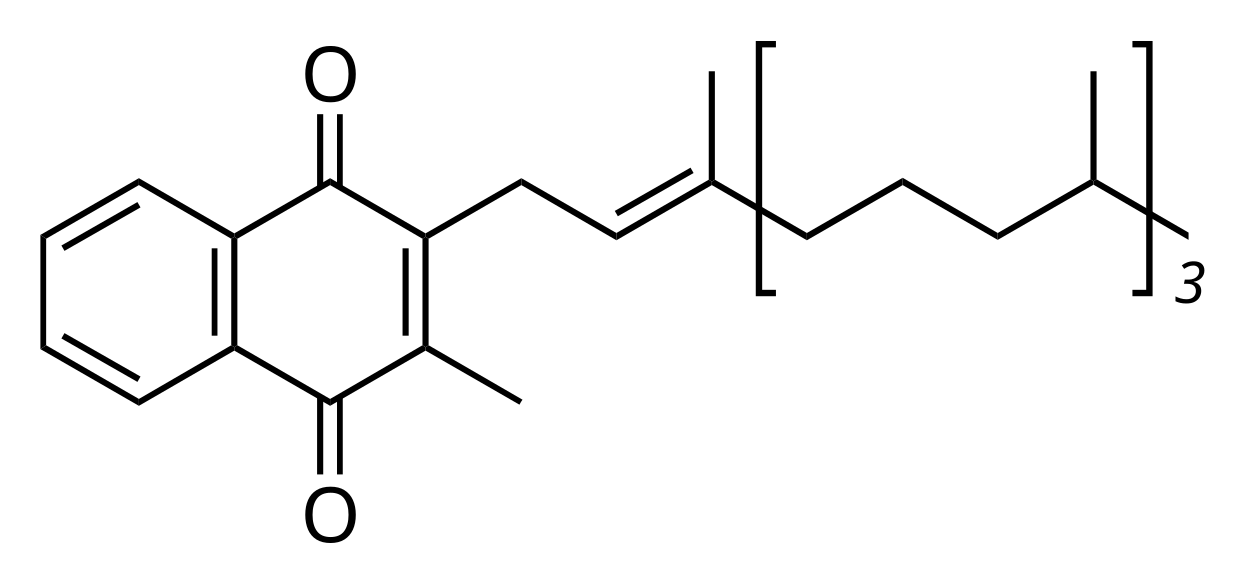
Structural formula of phylloquinone (vitamin K1).
Credit: Mysid / Wikimedia Commons

License: Public domain
Rendered from SVG to PNG, whitespace trimmed and placed on white
What it is
Vitamin K is a fat-soluble vitamin that includes phylloquinone (vitamin K1, CAS 84-80-0) and menaquinones (vitamin K2). [1,2,4] The body stores it in the liver and other tissues, including the brain, heart, pancreas and bone. [2]
What it does and why it is used
The liver needs vitamin K to make clotting factors II, VII, IX and X; without it, blood would not clot. [2] It is also important for healthy bones. [1]
Regulatory status and health context
Canada
Canada's Food and Drug Regulations say the vitamin K content of a food is determined from phylloquinone and menaquinones, expressed in micrograms. [3] The sources used for this review do not cover Canadian rules for vitamin K supplements.
United States
The NIH Office of Dietary Supplements says vitamin K has not been shown to cause any harm and lists recommended daily amounts by age, from 2.0 mcg for young babies to 120 mcg for adult men. [1]
European Union
The EU law website was not fully available when this article was reviewed, so EU legal status was not checked and is not summarized here.
Environmental notes
The sources used for this review do not assess vitamin K's environmental effects, so we do not summarize them here.
Quick facts
- CAS: 84-80-0 (phylloquinone). [4]
- Where: leafy greens, vegetable oils, supplements. [1]
- Main concern: interaction with warfarin. [1]
- Most at risk: people taking warfarin. [1]
Sources
All URLs were fetched on 2026-11-15; NIH Office of Dietary Supplements pages were read with a separate web-reading tool because they did not respond to this review's direct requests. The EU law website was not fully available that day, so EU legislation could not be checked. Source publication dates differ from this draft's review date.