
Monk fruit extract (luo han guo): what is known about this natural sweetener
CAS 88901-36-4.Also known as luo han guo, Siraitia grosvenorii extract, mogrosides, mogroside V, and lo han kuo.
Editorial draft Last reviewed 21 November 2026 About 640 words
CC INDEX
How it works28/100 Mild
No human harm is reported in the sources. EFSA could not set a safe intake because of data gaps, while FDA raised no questions about its GRAS status. Use is growing in low-sugar products.
An editorial summary of this article’s cited evidence. It isn’t medical advice or a personal risk estimate.
Age index
What is the age index?Which age groups are more affected by this chemical’s possible health issues, based on this article’s sources.
- Pregnancy Unborn babies Not well studied
- Infants 0 to 1 Not well studied
- Young children 1 to 5 Not well studied
- Children 6 to 12 Not well studied
- Teens 13 to 19 Not well studied
- Adults 20 to 64 Not well studied
- Older adults 65 and over Not well studied
- The sources used here contain no human safety studies for any age group.

Illustration of dried monk fruit and powdered extract.
Credit: Chemical Century; AI-generated illustration
License: CC0 1.0
Illustration, not a photograph of a specific product. Resized and cropped for the web.
Monk fruit extract is a zero-calorie sweetener made from the fruit of the luo han guo plant. It is used as a tabletop sweetener and in foods and drinks. The United States accepts it as safe, but European food-safety scientists said in 2019 that the safety data were too thin to reach a conclusion, partly because of unexplained testis effects in a rat study. For most people the bigger issue may be what it is blended with, so check the full ingredient list.
Everyday exposure: where you meet it and how much
Monk fruit extract is made by extracting the fruit of Siraitia grosvenorii with water. [1] In the United States it has been notified to FDA as generally recognized as safe (GRAS) for use as a sweetener and flavour enhancer in foods and as a tabletop sweetener; FDA responded that it had no questions. [2,3] In EFSA's exposure modelling, which assumed it would be used across all proposed foods, intakes ranged from 0.6 to 36.4 mg of mogroside V per kg of body weight a day on average. [1]
Known and suspected harms
Evidence labels are editorial summaries, not individual risk predictions: established means recognized under the stated conditions; probable means a likely contribution with uncertainty; possible means limited evidence; disputed means assessors disagree.
- Disputed — overall safety: EFSA concluded in 2019 that the toxicity data were insufficient to conclude on the safety of monk fruit extract as a food additive and could not set a safe daily intake. [1] FDA, by contrast, raised no questions about a 2009 GRAS notice for the extract. [2]
- Possible — testis effects in rats: in a 90-day rat study, an extract with 52% mogroside V decreased testis weight with tissue changes. EFSA said these effects could not be dismissed and that a longer study at higher doses would be needed. [1]
EFSA found that the extracts tested did not cause gene mutations or chromosome damage in standard tests, but said those tests did not adequately cover breakdown products made by gut bacteria. No developmental toxicity was seen in a prenatal study. [1]
Reducing avoidable exposure
Many monk fruit sweeteners are blends; read the ingredient list to see what else is in the product. The sources used here do not cover human health effects of monk fruit itself.
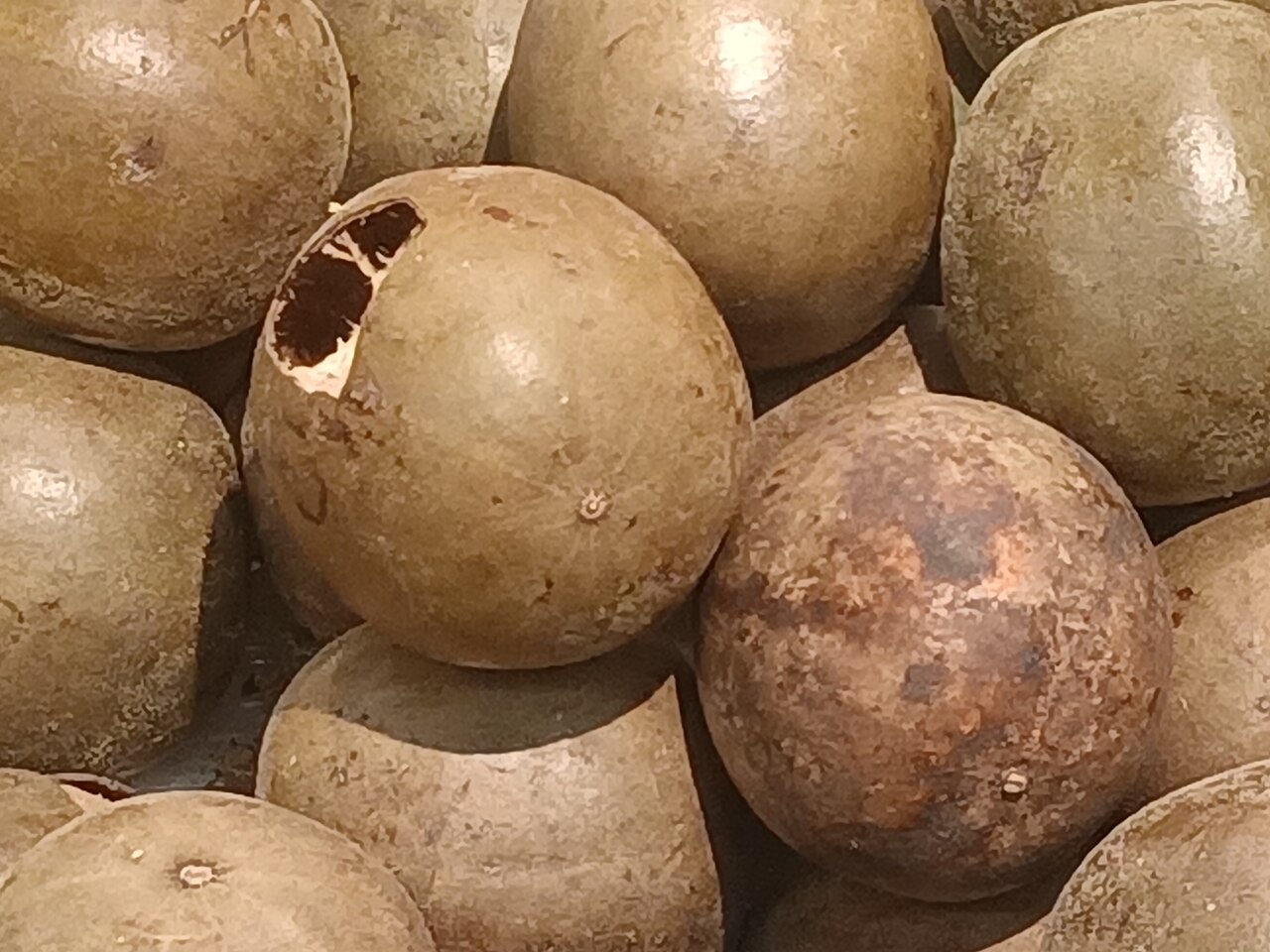
Dried monk fruit (luo han guo).
Credit: Fumikas Sagisavas / Wikimedia Commons

License: CC0
Wikimedia-provided scaled PNG/JPEG rendering; no content edits
What it is
The sweetness comes from mogrosides, a family of compounds in the fruit; mogroside V is the main one in the extract. Mogroside V is absorbed to some extent and reaches the bloodstream. [1]
What it does and why it is used
It sweetens foods and drinks without adding meaningful calories. [1,2]
Regulatory status and health context
Canada
The sources used here do not cover Canadian rules for monk fruit extract.
United States
FDA responded that it had no questions about GRAS Notice 301 for luo han guo fruit extract (closed in 2010); further notices for the extract have since been filed. [2,3]
European Union
EFSA could not conclude on safety in 2019, so no safe intake was set. [1]
Environmental notes
The sources used here do not provide enough environmental data for a rating.
Quick facts
- Source plant: Siraitia grosvenorii (luo han guo). [1]
- Main sweet compound: mogroside V. [1]
- US: GRAS notice with no FDA questions (2010). [2]
- EU: safety not concluded (2019). [1]
Sources
Sources were accessed on 2026-11-21. Source publication dates differ from this draft's review date. Image licences are listed with each image.